
Automotive Ecommerce Solutions for Parts Distributors, Retailers & Brands
Automotive ecommerce is selling vehicle parts online to repair shops, fleets, dealers and consumers. It only works when fitment, customer pricing and inventory are right on every page. StrikeTru builds B2B portals, and B2C and D2C storefronts for auto parts on BigCommerce and Shopify, connected to your ERP and powered by fitment-grade product data.
Who we build automotive ecommerce for
Aftermarket parts distributors
Your buyers are repair shops, fleets, jobbers and dealers who order by part number, expect their own price and want stock before they commit. We build B2B portals with account pricing, credit terms, quotes and quick order, synced with your ERP.
B2B ecommerce for auto parts distributors →Online parts retailers
Your shoppers start with a vehicle, not a SKU. We build storefronts where year-make-model, fitment confirmation, search and feeds work together, so shoppers find the right part and keep it.
Auto parts ecommerce for online retailers →Manufacturers and brands
You sell to distributors and consumers at the same time. We build B2B and D2C on one platform without channel conflict.
Specialty verticals: Heavy-duty truck parts · Powersports parts · Classic Car Accessories
Why auto parts break generic ecommerce
A standard ecommerce build assumes a product fits everyone who buys it. Auto parts don't. These are the problems we design for from day one:
Fitment
One brake pad can fit hundreds of vehicles, and one vehicle can need thousands of parts. Fitment must live in structured data, not in product descriptions.
Fitment data management →Part-number buying
Professional buyers search by part number, competitor interchange or superseded number. Keyword search alone fails them.
Part number and interchange search →Customer-specific pricing
Distributors run tiered price lists, contract pricing and account terms. Your storefront has to show each buyer their own price.
B2B ecommerce for distributors →ERP truth
Price, stock and credit live in the ERP. If the storefront drifts from it, orders fail.
ERP integration →Checkout rules
Core charges, CARB-restricted parts, Prop 65 warnings, hazmat and oversize freight all change what can be sold and shipped.
Multi-warehouse and dropship
Availability depends on which warehouse or supplier ships the part.
Wrong-part returns
Every return of a part that didn't fit costs freight, handling and a customer.
How automotive ecommerce fits together
Every parts business we work with runs on the same five layers. Problems usually start where two layers meet.
We design and integrate all five, so you don't manage three vendors who each blame the layer next to them.
Platforms we build on
| Platform | Best fit for | What we deliver |
|---|---|---|
| BigCommerce + B2B Edition | Distributors and brands that need B2B portals, price lists and several storefronts | B2B Edition set-up, Multi-Storefront, ERP sync, fitment data, Searchspring, Year-Make-Model search, Shop by diagram, Exploded Views, Multi-Location Inventory, Multi-Warehouse Shipping |
| Shopify / Shopify Plus | D2C parts retailers and brands; growing B2B on Shopify | Storefront builds, fitment metafields, B2B company profiles, Markets, Searchspring, Year-Make-Model search, Shop by diagram, Exploded Views |
| Adobe Commerce | Mid-to-large enterprises, complex B2B operations, and high-volume multi-store brands that require heavy customization and deep system integrations | Architecture and integration |
| Miva | High-SKU parts catalogs running B2B and B2C from one install | Architecture and integration |
| Salesforce Commerce or headless | Enterprise distributors with complex, multi-system requirements | Architecture and integration |
Not sure which fits? Best ecommerce platform for auto parts: 2026 buyer's guide →
What we deliver
B2B portals
Company accounts, price lists, quotes, shopping lists, quick order, invoices and rep-assisted ordering.
D2C storefronts
Vehicle-first browsing, fitment confirmation, fast search, conversion-focused product pages.
Search and parts finders
YMM, part number, interchange, VIN, Shop by diagram, and Exploded views.
Commerce apps →Replatforming
From Adobe Commerce (Magento), Miva, Sana, custom builds, and other without losing fitment or rankings.
Replatforming →Agentic commerce readiness
Catalogs and feeds that AI shopping assistants can read and buy from.
Managed services
Ongoing releases, data operations and support, SEO, GEO, and Paid Ads management.
Managed services →Proven automotive ecommerce implementations
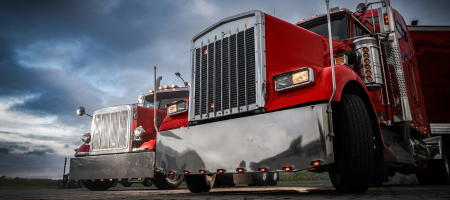
Raney's Truck Parts
BigCommerce B2B Edition and Multi-Storefront with NetSuite. 1200+ B2B customers, 2,000 locations, 4-tier price lists across 100,000 SKUs, digital quoting and rep-assisted ordering.
Read the case study →
Automotive keys distributor
Akeneo PIM, BigCommerce and Searchspring, with NetSuite as inventory authority. Automated year-make-model data, variant pricing and dropship controls.
Read the case study →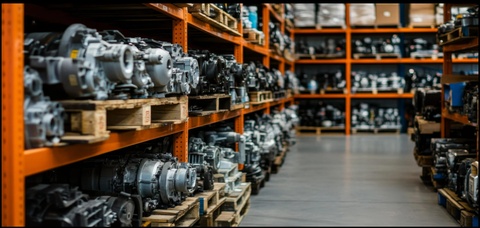
Automotive parts retailer
TruPIM and Fishbowl ERP with near real-time sync to Shopify and Google Merchant Center.
Read the case study →
Truck and classic parts manufacturer
Akeneo PIM and Microsoft Dynamics NAV feeding a new Miva storefront for distributors, retailers and consumers, governed by 300+ catalog behavior rules.
Read the case study →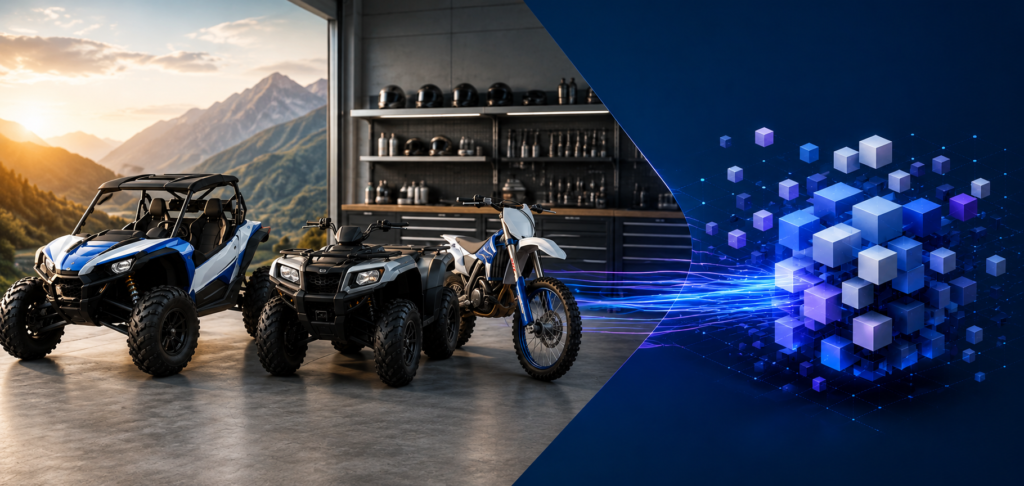
Powersports dealer
ARI, OEM and distributor feeds normalized in Akeneo, with daily price and inventory sync and year-make-model discovery.
Read the case study →How an engagement works
For BigCommerce B2B, the fixed-price B2B Quick Start Accelerator starts at $15K.
How AI shopping assistants see auto parts catalogs
In our 2026 audit of 998 product pages across 10 auto parts merchants, AI assistants named the merchant's own store for only 37.4% of its products. Every fitment-readiness dimension scored below 2.0 out of 5. Read the Auto Parts AI Discoverability Report →
Automotive ecommerce FAQs
Short answers to what buyers ask most. Each links to a deeper page where one exists.
What is automotive ecommerce?
Automotive ecommerce is selling vehicle parts and accessories online, either B2B to repair shops, fleets and dealers, or D2C to consumers. It differs from general ecommerce because every part must match specific vehicles (fitment), and B2B buyers expect their own pricing, terms and real-time stock.
Which ecommerce platform is best for auto parts?
There's no single best platform. BigCommerce with B2B Edition suits distributors that need portals, price lists and several storefronts. Shopify suits D2C retailers and brands. Adobe Commerce (Magento) suits mid-to-large enterprises, complex B2B operations, and high-volume multi-store brands that require heavy customization and deep system integrations. Miva suits high-SKU catalogs that run B2B and B2C together. The right choice depends on your buyers, catalog size, fitment model and ERP. See our platform buyer's guide.
Do we need a PIM before we build an auto parts store?
Not always, but most parts businesses with more than a few thousand SKUs or complex fitment do. The commerce platform sells; the PIM keeps product and fitment data accurate across every channel. We often build both together. See Automotive PIM.
How long does an automotive ecommerce project take?
A BigCommerce B2B launch on an existing storefront can take 1–3 months through our accelerator. A full replatform with ERP integration, fitment migration and B2B portals typically takes 4–6 months.
Can you integrate our ERP?
Yes, We've connected NetSuite, Microsoft Dynamics NAV and Fishbowl to parts storefronts for price, inventory, orders and invoices, using custom integrations or iPaaS tools such as Celigo and iPaaS.com. See ERP integration.
Do you build B2B portals for repair shops and fleets?
Yes. B2B portals for distributors are our most common automotive project. They include company accounts, customer-specific pricing, quotes, quick order by part number, credit terms and invoice access.
How do you handle fitment on BigCommerce or Shopify?
Fitment is modeled and governed in a PIM or structured data source, then synced to the platforms: metafields and metaobjects on Shopify, product data and custom fields and metafields on BigCommerce, feeds to search apps, and indexed by the YMM search app. That keeps fitment consistent across the store, feeds and marketplaces.
Can AI shopping assistants buy from our store?
They're starting to. ChatGPT, Google AI Mode and Microsoft Copilot now support in-chat checkout for some merchants through protocols like UCP and ACP. To be chosen, your fitment and product data must be readable as text.
Get an Automotive Commerce Experience Review
We'll review your storefront or portal, product data and ERP connection, and show you where orders, margin and customers are leaking.