
Automotive Fitment Data Management for Complex Parts Catalogs
Automotive fitment data management is the process of structuring, validating and publishing which vehicles each part fits. That usually means Year/Make/Model plus qualifiers such as engine, submodel and position. Fitment is a relationship between parts and vehicle configurations, not a single attribute. Managing it well needs a relational data model, quick search, bulk and automated updates, and governed delivery to every sales channel.
| Year | Make | Model | Submodel | Engine | Position |
|---|---|---|---|---|---|
| 2019–2023 | Ford | F-150 | XLT | 3.5L V6 | Front |
| 2019–2023 | Ford | F-150 | Lariat | 5.0L V8 | Rear |
| 2020–2023 | Ford | Expedition | XLT | 3.5L V6 | Front |
| 2021–2023 | Lincoln | Navigator | Base | 3.5L V6 | Rear |
Illustrative record. Fitment shown as readable text, not only inside a vehicle selector.
What is fitment data management?
Fitment data tells shoppers, search and AI engines and trading partners exactly which vehicles a part fits. Fitment data management keeps that information complete, consistent and current: from supplier files and ACES imports, through validation in your PIM, to every storefront, search and AI tool, and marketplace.
When fitment management works, you get:
- One governed source of fitment truth instead of spreadsheets, ERP fields and storefront edits
- Fitment updates that flow automatically to Shopify, BigCommerce, search, AI LLMs, and marketplaces
- Fewer wrong-fit orders, rejected listings and “will this fit my vehicle?” support tickets
Why Fitment Breaks in Most Catalogs
Most catalogs weren’t designed for fitment. They added it later, one workaround at a time.
Spreadsheets as the system of record
Fitment lives in files that are emailed, versioned by hand and impossible to validate at scale.
Fitment stuffed into ERP attributes
ERP fields weren’t built for many-to-many relationships, so fitment gets truncated, duplicated or dropped.
Duplicate SKUs per vehicle
Creating a listing per vehicle explodes SKU counts and splits reviews, inventory and search ranking.
Inconsistent supplier data
Every supplier sends fitment differently, with different vehicle naming, qualifiers and notes.
Slow updates
New model years and corrections take weeks to reach the storefront, so shoppers see outdated fitment.
Wrong-fit returns
Missing qualifiers and unclear notes lead to wrong-fit orders, returns and marketplace penalties.
Fitment Is Relational: The Model That Scales
Fitment is a many-to-many relationship between parts and vehicle configurations. One part fits many vehicles, and one vehicle accepts many parts. Treating fitment as a product attribute breaks as soon as the catalog grows.
| Approach | Fitment as an attribute | Fitment as a relationship (recommended) |
|---|---|---|
| How it’s stored | A text field or list on the product | Separate application records linking a part to vehicle configurations |
| Qualifiers & notes | Mixed into free text, hard to filter | Structured qualifiers (engine, submodel, position) and fitment-specific notes |
| Scale | Breaks at hundreds of vehicles per part | Handles tens of thousands of applications per part |
| Validation | Manual spot checks | Automated checks for holes, overlaps and invalid applications |
| Channels | Re-keyed per storefront or marketplace | Generated once, transformed per channel |
YMM + qualifiers
Year/Make/Model is the base vehicle key, but rarely enough on its own. Accurate fitment adds submodel, engine, drive type, body style and position (front, rear, left, right), plus fitment notes for exceptions such as “with 13.78-inch rotor package.” We align vehicle data to the Auto Care VCdb and qualifiers to the Qdb, so the same vehicle means the same thing in every system.
Parents, variants, kits and virtual SKUs
Fitment often differs by variant, and kits combine components with different applications. We model parent/variant relationships, kits and components, and use virtual SKUs where a storefront needs a fitment-specific listing without duplicating the physical product or splitting inventory.
Why a standard PIM setup struggles with this model: Generic PIM vs automotive PIM →
Sourcing and Automating Fitment
Fitment arrives from many places. We turn it into one governed flow that updates itself.
Fitment exchanged with trading partners follows the ACES standard. See ACES & PIES data management →
Fitment Validation & Quality Controls
Bad fitment costs more than missing fitment. Every change is checked before it reaches a shopper or trading partner.
Holes
Vehicles a part family should cover but doesn’t, such as a missing model year in an otherwise continuous range.
Overlaps
Two parts claiming the same vehicle and position without a distinguishing qualifier.
Invalid applications
Year/Make/Model combinations or qualifiers that don’t exist in the current reference data.
Qualifier conflicts & stale reference data
Contradictory qualifiers, and fitment that hasn’t been re-checked after a VCdb or Qdb update.
Activating Fitment in Commerce and Search
Fitment only pays off when shoppers, search tools and AI assistants can use it.
What We See in Implementations
- Model before you migrate. Teams that import legacy fitment before agreeing on the vehicle and qualifier model end up cleaning it twice.
- Plan for the long tail. A few products carry most of the applications. Design storage, updates, automations, sync, and search for the part with 60,000 fitments, not the average part.
- Use virtual SKUs deliberately. They solve search and storefront limits, improve SEO and Return on Ad Spend (ROAS), but each one needs a clear rule back to the physical product and its inventory.
- Automate assignment, review exceptions. Rule-based assignment by supplier or category handles the bulk; people should only see the exceptions.
- Centralize fitment & catalog management. An automotive PIM helps create consistently high-quality data with less effort. ERP, eCommerce, home-grown, or excel based systems are inadequate.
“In automotive commerce, the storefront is rarely what holds a merchant back. It’s the product data underneath it. We’ve helped automotive merchants model catalogs of 50,000 to 500,000+ SKUs, manage complex year-make-model fitment (that can scale up to 60,000 fitments on a single product), and run customer-specific pricing for hundreds of B2B accounts. Every time, the breakthrough was the same: govern the data in one place, automate the repetitive work, and let the commerce platform do what it does best. When fitment, pricing, and enrichment are engineered rather than manually maintained, merchants scale their catalogs without scaling their headcount, and their search, marketplace, and advertising performance improve as a result.”
Vik Gundoju, Principal Consultant & Founder, StrikeTru
Fitment at Scale: Case Studies
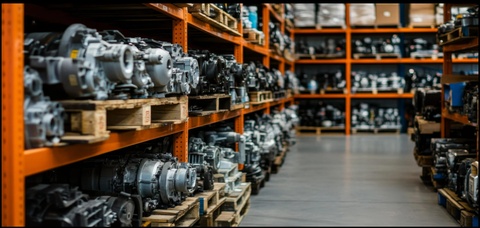
Automotive Parts Retailer
Category-based fitment assignment, YMM, part groups and fitment notes synced to Shopify with dynamic virtual SKUs.
Read More →
Automotive Parts Distributor
Supplier-specific fitment assignment, YMM synced to SearchSpring and near real-time BigCommerce sync.
Read More →
Automotive Parts Manufacturer
Automated fitment assignment and governance workflows, with YMM and fitments synced across multi-store B2B.
Read More →Is your fitment model ready to scale?
We’ll review how your fitment is sourced, stored, validated and published, and show where it’s costing you sales.
What is automotive fitment data?
Automotive fitment data defines which vehicles a part fits, expressed as Year/Make/Model plus qualifiers such as submodel, engine and position. It’s stored as application records that link each part to the vehicle configurations it fits.
What is YMM fitment?
YMM stands for Year/Make/Model, the base key for identifying a vehicle. YMM fitment refines that key with qualifiers and notes so each application is precise enough to prevent wrong-fit orders.
Should fitment live in the ERP, PIM or ecommerce platform?
Usually in the PIM, or a fitment layer connected to it, as the system of record. The ERP keeps commercial data such as price and inventory, and the commerce platform consumes fitment for display and search. Generic vs automotive PIM →
How do you handle a part that fits tens of thousands of vehicles?
With a relational fitment model, category-based assignment rules and sync designed for high application counts. One retailer implementation supports 60,000+ fitments per product. Read the case study →
How does fitment relate to ACES?
ACES is the Auto Care Association standard for exchanging fitment (application) data between manufacturers, distributors and retailers. A governed PIM can import ACES files and generate validated ACES exports. ACES & PIES data management →
How do I reduce wrong-fit returns?
Complete the qualifiers, write clear fitment notes, validate for holes, overlaps and invalid applications, and show the same fitment consistently on every channel, including as readable text on the product page.
Request a Fitment Architecture Review
Share your catalog size, fitment sources and channels. We’ll map how fitment should be modeled, validated and published for your stack, with no pitch, just a working session.