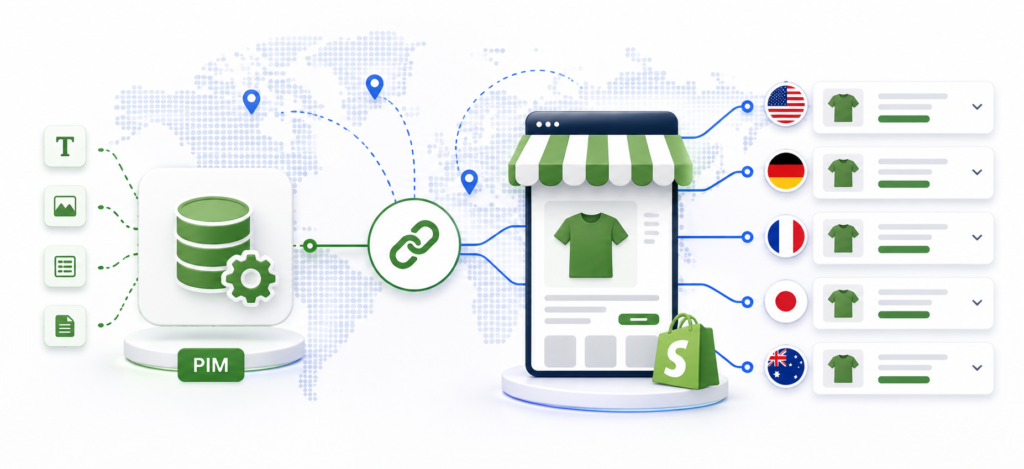
Expanding into multiple storefronts shouldn't mean multiplying your product management effort.
BigCommerce Multi-Storefront (MSF) allows businesses to manage multiple storefronts from a single BigCommerce instance. Whether you’re supporting multiple brands, regional websites, B2B and B2C experiences, or international markets, MSF provides the flexibility to deliver tailored shopping experiences while simplifying platform management.
However, as the number of storefronts grows, managing product information becomes significantly more complex. Each storefront may require different assortments, localized content, region-specific compliance information, promotional messaging, or customer experiences. Without a structured approach to product information management, maintaining consistency across every storefront quickly becomes an operational challenge.
The challenge isn’t launching multiple storefronts. It’s ensuring every storefront receives the right product information while avoiding duplicate work and maintaining consistent governance.
Why Product Governance Matters
Adding new storefronts increases more than the number of websites. It also increases the number of product decisions your organization needs to manage.
Teams often need to answer questions such as:
- Which products should appear on each storefront?
- Which product content should be shared across every market?
- Which descriptions, images, or documents should remain unique?
- How are regional compliance requirements managed?
- Who approves product changes before they reach individual storefronts?
Without clear governance, different teams often maintain separate versions of the same product information, resulting in duplicate work, inconsistent customer experiences, and slower product launches.
A well-governed product information strategy allows businesses to maintain consistency where appropriate while supporting the flexibility required for different markets, brands, and customer segments.
Common Multi-Storefront Challenges
Organizations implementing Multi-Storefront commonly encounter challenges such as:
- Maintaining consistent product information across brands
- Supporting multiple languages
- Managing storefront-specific categories
- Publishing different product assortments
- Maintaining regional compliance information
- Coordinating product launches across storefronts
- Managing shared and localized digital assets
- Scaling catalog operations as new storefronts are added
These challenges become increasingly operational rather than technical as the business grows. Success depends as much on governance and process as it does on technology.
Build a Scalable Product Model
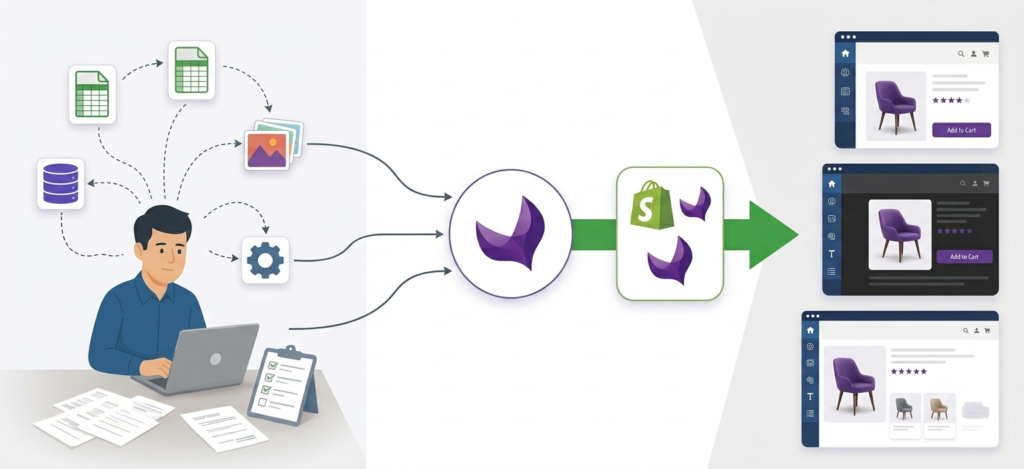
One of the biggest advantages of combining Akeneo PIM with BigCommerce Multi-Storefront is the ability to manage product information once while supporting multiple storefront experiences.
Instead of creating separate product records for every brand or market, organizations can build a flexible product model that supports both shared and storefront-specific information. This reduces duplication, improves data quality, and makes it easier to introduce new storefronts without redesigning the catalog structure.
A scalable product model allows businesses to accommodate future growth while maintaining consistent governance across every storefront.
Design a Shared vs. Storefront-Specific Product Model
One of the most important decisions in a Multi-Storefront implementation is determining which product information should be shared across every storefront and which should remain unique.
Many product attributes rarely change between markets, including:
- Technical specifications
- Dimensions and weights
- Manufacturer information
- Core product relationships
- Product identifiers
Managing this information centrally reduces duplication and improves data quality.
Other content is often storefront-specific, such as:
- Marketing descriptions
- Promotional messaging
- SEO metadata
- Featured imagery
- Downloadable resources
- Regulatory notices
- Local merchandising content
Separating shared product information from storefront-specific content creates a more scalable product model and significantly reduces long-term maintenance effort.
Establish Clear Ownership Across Teams
Technology alone does not solve Multi-Storefront complexity.
Successful organizations clearly define who owns each stage of the product lifecycle.
For example:
- Product teams maintain technical specifications.
- Marketing teams own product descriptions and campaign messaging.
- Merchandising teams manage assortments and storefront presentation.
- Ecommerce teams oversee publishing and storefront readiness.
Clearly defined ownership reduces approval bottlenecks, improves accountability, and helps ensure every storefront publishes consistent, high-quality product information.
As organizations expand into additional brands or markets, governance becomes one of the most important factors in maintaining operational efficiency.
Plan for Localization Early
Localization involves much more than translating product descriptions.
Different markets frequently require:
- Local terminology
- Units of measure
- Regulatory information
- Warranty details
- Certifications
- Region-specific imagery
- Market-specific promotional messaging
For example, a product sold in North America may require different compliance information than the same product sold in Europe or Australia.
Planning these requirements within the product model from the beginning allows businesses to support localized experiences without creating duplicate product records for every storefront.
Localization should also be designed to accommodate future markets. Establishing consistent naming conventions, translation workflows, and regional approval processes early makes it significantly easier to launch additional storefronts without introducing unnecessary complexity or duplicate product information.
Build Repeatable Governance Processes
As more storefronts are introduced, product management should become more standardized, not more complicated.
Establish repeatable processes for:
- Product enrichment
- Content reviews
- Approval workflows
- Publishing readiness
- Content quality checks
- Periodic catalog audits
Standardized governance helps ensure every storefront follows the same quality standards while allowing flexibility for market-specific requirements.
It also makes onboarding new brands, teams, and storefronts significantly easier.
Prepare for Future Storefront Expansion
Many businesses launch Multi-Storefront with two websites but continue expanding over time.
Future growth may include:
- Additional brands
- Regional storefronts
- Dealer portals
- Wholesale storefronts
- International markets
- Industry-specific storefronts
Planning for expansion early helps avoid restructuring the product model later.
Before launching additional storefronts, evaluate whether your product attributes, approval workflows, media organization, and category structures can support future requirements without creating unnecessary complexity.
Organizations should also periodically review whether their attribute model, category hierarchy, media organization, and governance processes continue to support business objectives. Regular governance reviews help identify opportunities to simplify operations before complexity begins to affect day-to-day catalog management.
A scalable product management strategy enables businesses to launch new storefronts faster while maintaining operational consistency.
How StrikeTru Helps
StrikeTru helps manufacturers, distributors, and retailers implement product information management solutions that support scalable BigCommerce Multi-Storefront strategies.
By helping organizations centralize product information, establish governance processes, and support storefront-specific experiences, StrikeTru enables businesses to expand into new markets while reducing operational complexity and improving product data consistency.
Final Thoughts
BigCommerce Multi-Storefront provides the flexibility to support multiple brands, regions, and customer segments from a single commerce platform. Long-term success, however, depends on having a product information strategy that scales alongside the business.
Organizations that establish a reusable product model, define clear ownership, and implement consistent governance processes are better positioned to expand without multiplying catalog management effort. By balancing shared product information with storefront-specific experiences, businesses can launch new storefronts more efficiently while maintaining the quality and consistency customers expect.
As new markets, brands, and sales channels are introduced, a well-governed product information strategy becomes the foundation for sustainable Multi-Storefront growth.