Managing a product catalog manually may work at first, but it rarely scales.
Many ecommerce businesses begin with a relatively small catalog. Product information is maintained directly in BigCommerce, updates are straightforward, and a small team can keep everything current without much difficulty.
As the business grows, however, new suppliers are onboarded, product assortments expand, marketing teams need richer content, and customers expect accurate information across every touchpoint. What was once a simple maintenance task gradually becomes a significant operational responsibility.
The cost of manual catalog management isn’t measured only in employee time. It affects operational efficiency, customer experience, and ultimately, the business’s ability to grow.
Why Manual Catalog Management Becomes Difficult
Manual catalog management works well for small catalogs but becomes increasingly difficult as product assortments, suppliers, and product information grow.
Product specifications evolve, images are replaced, compliance information changes, and marketing teams continually refine content. Without a structured process, maintaining accurate product information quickly becomes challenging.
Common challenges include:
- Updating the same information in multiple places
- Keeping product descriptions consistent
- Managing hundreds of product attributes
- Coordinating updates across multiple teams
- Tracking supplier changes
- Maintaining accurate images and digital assets
- Publishing products on schedule
- Correcting data inconsistencies after products go live
None of these tasks are particularly difficult on their own. The challenge comes from their volume and frequency.
The Hidden Costs Most Businesses Don't Measure
The impact of manual catalog management extends well beyond the time required to update products.
Delayed Product Launches
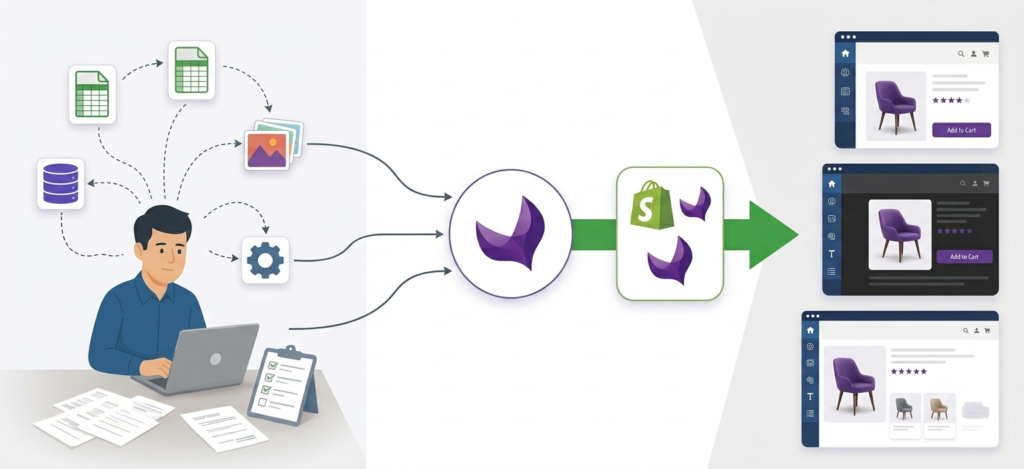
Launching a new product often involves gathering specifications, reviewing marketing content, approving images, and publishing information to the storefront. When these activities rely on spreadsheets, emails, and manual updates, launch timelines become longer and less predictable.
Inconsistent Customer Experience
Customers expect product information to be complete and accurate. Missing specifications, outdated images, conflicting descriptions, or incorrect dimensions reduce confidence and increase the likelihood of abandoned purchases or product returns.
Increased Operational Overhead
Merchandising, ecommerce, marketing, and customer support teams often spend significant time answering questions or correcting product information that could have been managed more efficiently through standardized processes.
Marketing Bottlenecks
Marketing campaigns rely on accurate product information. If descriptions, images, or specifications are still being updated manually, campaign launches are often delayed while teams wait for catalog updates to be completed.
Higher Risk of Errors
The more manual touchpoints involved in maintaining a catalog, the greater the chance of publishing incorrect information, from missing attributes to outdated specifications and incorrect images.
The Compounding Effect of Manual Processes
Manual catalog management doesn’t become expensive because of one large problem. It becomes expensive because of hundreds of small activities repeated every day.
Updating specifications, checking spreadsheets, requesting approvals, correcting errors, re-uploading images, answering internal questions, and verifying product information each take only a few minutes. Across thousands of products and multiple teams, those minutes accumulate into hundreds of hours every month.
Signs You've Outgrown Manual Catalog Management
Many organizations don’t realize they’ve outgrown their current processes until maintaining the catalog becomes a daily operational burden.
Common signs include:
- Product updates require multiple spreadsheets and email approvals.
- Different teams maintain separate versions of the same product information.
- Launching new products takes days instead of hours.
- Product information differs across sales channels.
- Teams spend more time fixing product data than improving it.
- Customer support regularly receives questions about inaccurate or incomplete product information.
If several of these situations sound familiar, the challenge is often not the ecommerce platform itself. It’s the lack of a centralized and governed approach to managing product information.
A Better Approach to Catalog Management
Leading organizations treat product information as a structured business process rather than a series of individual updates.
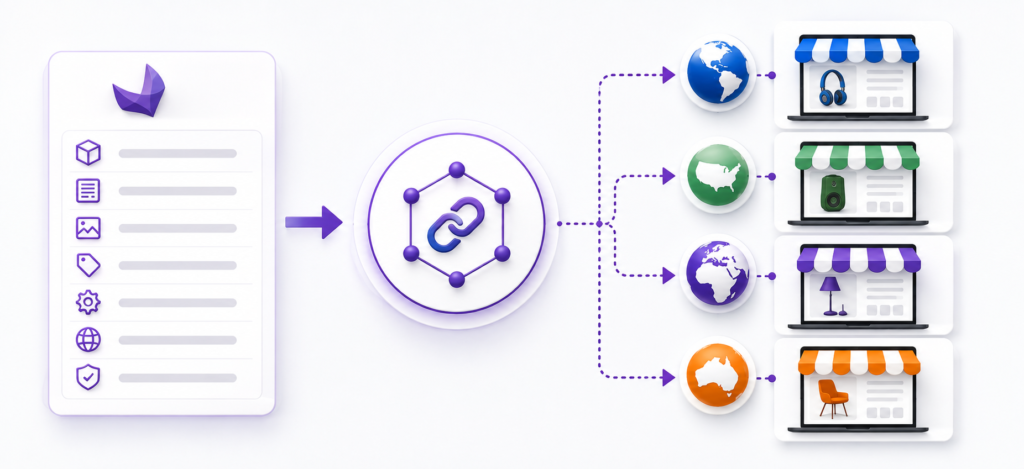
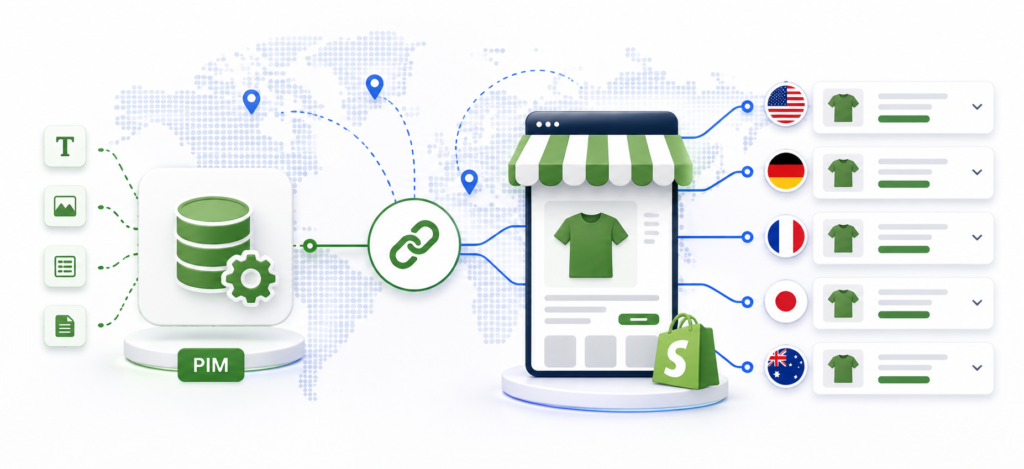
A centralized product information management solution enables teams to enrich, validate, review, and approve product content before it is published. Combined with clearly defined ownership, standardized workflows, and measurable quality standards, this approach helps maintain accurate product information throughout its lifecycle instead of relying on manual processes.
This approach provides several operational advantages:
- A single source for product information
- Standardized enrichment and approval workflows
- Consistent product data quality
- Clear ownership and governance
- Better collaboration between merchandising, marketing, and ecommerce teams
- Greater visibility into product readiness before launch
By improving governance around product information, businesses spend less time correcting errors and more time creating better product experiences.
Building a Foundation for Growth
Manual catalog management may work during the early stages of ecommerce, but growing businesses need processes that can scale alongside their product portfolio.
Standardized workflows, defined ownership, and strong governance enable organizations to maintain product quality while supporting new suppliers, additional sales channels, and future business growth.
How StrikeTru Helps
StrikeTru helps manufacturers, distributors, and retailers modernize product catalog management by implementing product information management solutions that simplify governance, improve data quality, and streamline publishing processes.
With deep experience in ecommerce and product data management, StrikeTru helps organizations replace manual catalog processes with scalable workflows that improve operational efficiency and support long-term growth.
Final Thoughts
Manual catalog management is rarely the biggest challenge during the early stages of ecommerce. As product portfolios, teams, and sales channels grow, however, manual processes become increasingly difficult to sustain.
Organizations that scale successfully recognize product information as a strategic business asset rather than an administrative task. By standardizing processes, improving governance, and reducing manual effort, they create a stronger operational foundation that supports faster product launches, higher-quality product information, and better customer experiences.