
Automotive PIM & Fitment Data Solutions for Aftermarket Parts
Fitment-native automotive PIM and product-data solutions for aftermarket manufacturers, distributors, retailers, and brands.
StrikeTru designs and implements automotive PIM that brings product data, YMM fitment and ACES/PIES exchange into one governed source of truth. It connects your ERP, ecommerce, marketplaces and AI-driven search, so your catalog launches faster and your parts get found.
What is an automotive PIM?
An automotive PIM (product information management system) is the central place where aftermarket parts companies manage product data, digital assets, vehicle fitment, recommendations, taxonomy, ACES/PIES exchange files and channel-ready content. It replaces spreadsheets, ERP attribute fields and storefront edits with one governed source that feeds every sales channel.
Aftermarket catalogs outgrow generic tools fast. A single part can fit thousands of vehicle configurations, and every distributor, marketplace and storefront needs that data in a different shape. Spreadsheets break first, then ERP fields, then generic PIM setups that treat fitment as one more attribute.
Where Automotive Product Data Breaks Down
These are the problems we hear from automotive parts manufacturers, distributors, and retailers every week.
Supplier Data Arrives Inconsistent
Every supplier sends product data differently, turning onboarding into manual cleanup. We standardize it automatically.
Product data enrichment →Fitment Data Is Hard to Maintain
Incomplete or wrong YMM data drives returns and rejected listings. We implement ACES/PIES-based fitment management, validated before launch.
Fitment data management →Product Launches Take Too Long
Manual categorization and enrichment delay new SKUs for months. We automate launches down to days.
Catalog automation →Systems Don't Talk to Each Other
ERP, PIM, and commerce platforms operate in silos, creating data gaps. We connect them into one flow.
Integration architecture →Search & Discovery Underperform
Weak YMM search and missing fitments mean customers can't find parts that fit. We structure data for better, more accurate results.
Search & AI discoverability →Marketplace Feeds Get Rejected
Incomplete attributes hurt feed quality and ROAS. We build syndication that meets marketplace requirements.
Syndication →Fitment Changes the Data Model
“A generic PIM manages products. An automotive PIM must manage relationships between products, vehicles, fitment rules, taxonomy, attributes, technical data, and downstream channel requirements.”
One part can map to thousands of vehicle configurations. That relationship, not the SKU, is what an automotive PIM has to model, validate and publish. Generic PIM vs automotive PIM →
One Partner Across Product Data, Commerce & Discovery
Fitment data management: Fitments, notes, kits, & virtual SKUs
We model vehicle-specific fitment (YMM with engine, submodel, and position qualifiers), taxonomy-driven fitment (Component, Part Group, Part SubGroup), attribute-based fitment (wheels, tires), and universal fitment. We also model and manage fitment-specific notes, kits and component relationships, and virtual SKUs for fitment variations. Fitment is published as readable content as well as the vehicle and part selector.
Fitment validation & quality: catch holes, overlaps, invalid applications and qualifier conflicts before they reach a storefront or trading partner.
Explore automotive fitment data management →ACES 5.0 & PIES 8.0 support
ACES describes which vehicles a part fits; PIES describes the part itself. The Auto Care Association released ACES 5.0 and PIES 8.0 in April 2026, with updated VCdb, PCdb, PAdb, Qdb and Brand Table databases. We generate and validate both from governed PIM data, per receiver, and keep them current through version changes.
Explore ACES & PIES data management →Automotive product enrichment, with governed AI
Attributes, taxonomy, descriptions, images and technical documents, enriched through supplier normalization rules, AI drafting and human approval. AI speeds up content, but it never invents fitment or specifications.
Explore automotive product data enrichment → AI Product Enrichment Tool →Integration architecture: ERP → PIM → commerce, search & marketplaces
Clear data ownership and near real-time synchronization across your stack. Two sample architectures we’ve delivered:
Syndication & discoverability: SEO, Merchant Center and AI search
Channel-ready feeds for marketplaces and trading partners, Google Merchant Center, on-site search, structured product content and schema, so shoppers, search engines and AI assistants can find and trust your parts.
AI product discoverability →Automotive PIM Capabilities & Proof
| Capability | What it means | StrikeTru proof |
|---|---|---|
| Fitment at scale | Vehicle-/taxonomy-/attribute-specific fitment with notes, kits, and virtual SKUs | 60K+ fitments per product; Shopify & BigCommerce fitment sync |
| Automated fitment | Supplier-specific and category-based fitment assignment | Automated fitment workflows at a parts distributor and retailer |
| ACES/PIES | Governed ACES 5.0 / PIES 8.0 generation and validation | ACES/PIES-based fitment management, validated before launch |
| Catalog scale | Centralized products, assets and fitment for high-SKU catalogs | 50K+ SKUs centralized and governed |
| Integrations | ERP → PIM → commerce, search and marketplaces | NetSuite → Akeneo → BigCommerce/SearchSpring; Fishbowl → TruPIM → Shopify |
| Global catalogs | Multi-country, multilingual product content | European motorsports retailer with integrated translation |
Proven Automotive Commerce Implementations
Automotive-focused PIM/PXM implementations built to centralize product data, automate operations, and scale multi-channel commerce.

Automotive Parts Distributor
Automated supplier-specific fitment, YMM synced to SearchSpring, near real-time BigCommerce sync.
Read More →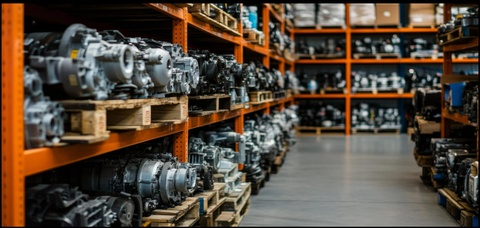
Automotive Parts Retailer
60K+ fitments per product, YMM and metafields into Shopify, dynamic fitment-based virtual SKUs.
Read More →
Automotive Parts Manufacturer
Automated fitment assignment and governance; products, YMM and fitments synced across multi-store B2B.
Read More →
Powersports Dealer
PIM for B2C commerce, with parts data onboarded from the ARINet industry data pool.
Read More →
Motorsports Retailer | Pierce
PIM for a European motorsports retailer selling in multiple countries, with integrated translation.
Read More →An Implementation Partner, Not Just Software
We’ve Done This in Automotive Before
15+ years implementing product data, commerce, and integration systems across manufacturers, distributors, and retailers.
We Bring the Whole Stack
PIM, commerce, integrations, and marketing under one team, not three vendors to coordinate.
We Deploy in Months, Not Years
Reusable automotive frameworks and accelerators reduce complexity and get you live faster.
We Speak Year-Make-Model & ACES/PIES Natively
Fitment modeling isn’t a learning curve for us. It’s where we start.
We Connect Data to Discovery
From marketplace feeds to AI shopping tools, we build data infrastructure that gets you found.
We implement Akeneo, Inriver and Syndigo. We also offer TruPIM, our own PIM for growing businesses. We recommend the platform that fits your catalog, team and stack.
Trusted for Complex Implementations
“For a Top Automotive Keys Distributor, the goal wasn’t just better data – it was faster, scalable commerce. By centralizing and automating their product ecosystem, we enabled the business to operate with speed, accuracy, and confidence.”
Vik Gundoju, CEO, StrikeTru50K+ SKUs automated
“Auto Parts Manufacturer had a working system, but it wasn’t built to scale across channels. We centralized product data in Akeneo PIM and replaced fragmented workflows with a structured, automated approach.”
Vik Gundoju, CEO, StrikeTru2 B2B sites launched
“This new B2B storefront represents a significant investment in our partnerships, providing our business customers with a more efficient and intuitive way to interact with us online.”
Davey Kusek, Sr. eCommerce Manager800+ customers enabledThe 2026 Auto Parts AI Discoverability Report
We audited 998 product pages at 10 auto parts merchants. AI assistants named the seller only 37.4% of the time, and every fitment-readiness dimension scored below 2.0 out of 5. See the eight gaps and how to fix them.
Read the ReportAutomotive PIM Questions
Short answers to what buyers ask most. Each links to a deeper guide.
What is an automotive PIM?
An automotive PIM is a product information management system built or configured to manage parts data together with digital assets, vehicle fitment, recommendations, taxonomy, ACES/PIES exchange and channel feeds Generic vs automotive PIM →
Do I need a specialized automotive PIM, or can a standard PIM work?
Horizontal PIMs such as Akeneo and Inriver can work for automotive when they have the right fitment data model and integrations. Specialized tooling makes sense when fitment volume or standards complexity is high. How to choose an automotive PIM →
Do you support ACES 5.0, PIES 8.0 and YMM fitment management?
Yes. We implement and manage ACES/PIES and YMM fitment data inside governed PIM workflows, including validation and receiver-specific exports, and we keep them current through standards changes. ACES & PIES data management →
Can you support large catalogs and products with tens of thousands of fitments?
Yes. One retailer implementation supports 60K+ fitments per product with category-based fitment assignment and YMM synchronization to Shopify. Read the case study →
Can you integrate with our ERP, commerce platform and marketplaces?
Yes. We connect ERP, PIM, BigCommerce, Shopify, search tools such as SearchSpring, Google Merchant Center and marketplaces, using connectors and custom integrations.
How long do automotive PIM implementations take?
Typically 4–6 months. Timelines depend on catalog complexity, fitment structures, integrations and automation scope, and implementations can be phased for quick wins.
Can AI enrich auto parts data safely?
Yes, for descriptions, attributes and normalization, with human approval and grounded in verified source data. AI should never invent fitment or specifications. Product data enrichment →
What does the Automotive Catalog Assessment include?
You share SKU count, current systems, ACES/PIES version, fitment sources and target channels. We return a report on missing attributes, taxonomy issues, fitment gaps, duplicates, and standards, marketplace, SEO and AI-search readiness.
Get Your Automotive Catalog Assessment
See where your fitment, product data and channel feeds are costing you time or sales, and what to fix first, benchmarked against what’s worked in similar automotive implementations. No pitch, just a working session.