Product information powers every ecommerce experience—but only when it flows seamlessly between your systems.
As ecommerce businesses grow, managing product information across multiple systems becomes increasingly challenging. Product descriptions, specifications, images, categories, digital assets, and merchandising content all need to remain accurate and consistent across every sales channel.
Many organizations use Akeneo PIM to centralize, enrich, and govern product information while relying on BigCommerce to power their online storefront. Integrating these two platforms creates a structured process for managing product information, improving data quality, and delivering consistent customer experiences without relying on repetitive manual updates.
This guide explains why organizations integrate Akeneo PIM with BigCommerce, how the integration works, how to prepare for implementation, and the best practices that contribute to long-term success.
Why Integrate Akeneo PIM with BigCommerce?
Akeneo and BigCommerce serve different but complementary purposes.
Akeneo provides a centralized environment for creating, enriching, validating, and governing product information before it is published. BigCommerce uses that approved information to deliver fast, reliable ecommerce experiences.
Without integration, product teams often maintain information across multiple systems, increasing the likelihood of duplicate work, inconsistent product content, and publishing delays.
Connecting Akeneo with BigCommerce establishes a clear operational process where product information is managed centrally before being delivered to the storefront. This improves collaboration between merchandising, marketing, ecommerce, and product teams while ensuring customers receive accurate and consistent product information.
Benefits of Integration
A well-planned integration provides benefits that extend beyond reducing manual effort.
Key advantages include:
- Centralized product information management
- Improved product data consistency
- Faster product launches
- Reduced manual administration
- Better collaboration across teams
- Improved product data quality
- Scalable catalog management
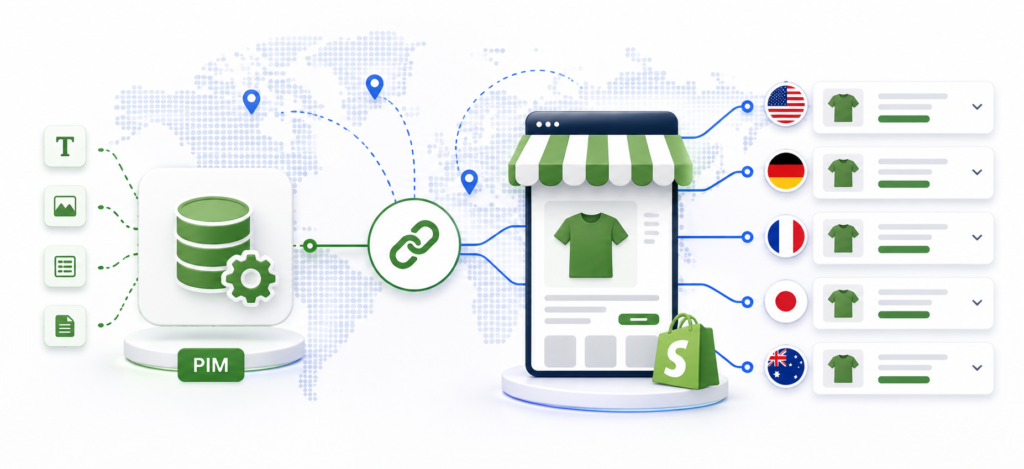
- Support for multiple sales channels
- More efficient merchandising operations
As product catalogs grow, these benefits become increasingly valuable because organizations can scale operations without proportionally increasing administrative effort.
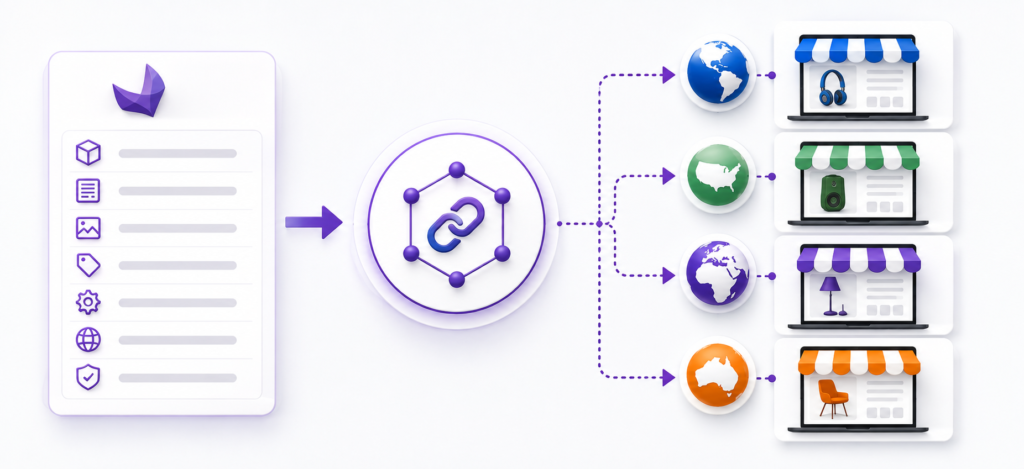
How Product Information Flows Between Akeneo and BigCommerce
Once Akeneo and BigCommerce are connected, product information follows a structured publishing process.
Product teams create, enrich, validate, and approve product information in Akeneo before publishing it to BigCommerce. This separation allows Akeneo to manage product information while BigCommerce focuses on delivering optimized ecommerce experiences.
The result is improved product consistency, better governance, and a more efficient publishing process.
Preparing for an Integration Project
Successful integrations begin long before systems are connected.
Before implementation, organizations should evaluate their existing product data, attribute structure, product families, category hierarchy, naming conventions, and overall data quality. This preparation helps identify duplicate attributes, inconsistent product information, and opportunities to simplify the catalog before integration begins.
It is equally important to establish ownership for product information. Defining who creates, enriches, reviews, approves, and publishes product information reduces confusion during implementation and creates a stronger operational foundation after go-live.
Organizations should also define data quality standards and publishing expectations before implementation begins. Investing time in preparation reduces implementation complexity while improving long-term catalog quality.
Selecting an Integration Strategy
Every organization has different technical and business requirements. Factors such as catalog size, internal expertise, implementation timelines, existing enterprise systems, and long-term maintenance expectations all influence the most appropriate integration strategy.
For a detailed comparison of custom integrations, middleware, and purpose-built connectors, see our guide:
Akeneo PIM Integration with BigCommerce: Custom Integration vs. Middleware vs. Purpose-Built Connector.
How the Integration Works
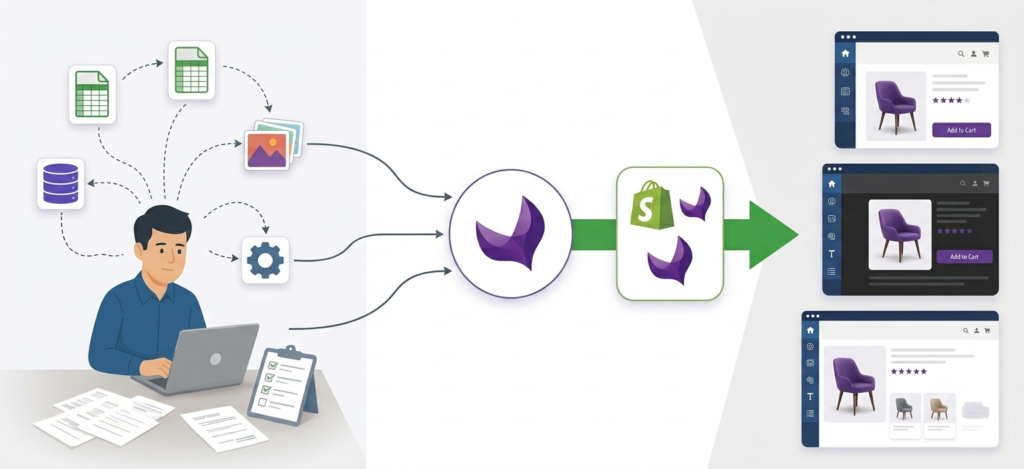
Although implementation details vary, the overall process is generally consistent:
- Product information is created and enriched in Akeneo.
- Products pass validation and approval workflows.
- Approved product information is published to BigCommerce.
- BigCommerce displays the updated information on the storefront.
- Ongoing publishing keeps the storefront aligned with approved product information.
This structured workflow allows product teams to improve product information while ensuring customers consistently receive accurate and up-to-date catalog content.
Best Practices for a Successful Integration
While every implementation is different, several best practices consistently contribute to successful Akeneo and BigCommerce integrations.
Establish clear ownership
Define which teams are responsible for creating, enriching, approving, and publishing product information to avoid conflicting updates.
Standardize product attributes
A consistent attribute model simplifies mapping, improves product quality, and supports future catalog growth.
Validate product information before publishing
Use workflows and quality checks to ensure products meet business standards before they reach the storefront.
Document the integration
Maintain documentation for mappings, workflows, publishing rules, and business ownership. Clear documentation simplifies troubleshooting, onboarding, and future enhancements.
Monitor integration health
Regularly review integration activity and resolve issues before they affect business operations.
Common Integration Challenges
Most integration projects are technically straightforward, but they often expose underlying product information challenges.
Common issues include:
- Inconsistent product attributes
- Duplicate product information
- Incomplete product data
- Category mapping differences
- Legacy catalog structures
- Managing large product catalogs
- Coordinating updates across multiple teams
Addressing these challenges before implementation improves project timelines and creates a stronger foundation for long-term product information management.
How StrikeTru Helps
StrikeTru helps manufacturers, distributors, and retailers integrate Akeneo PIM with BigCommerce using proven implementation practices and purpose-built integration solutions. Our team helps organizations improve product data quality, simplify catalog management, and establish scalable product information management processes that support long-term ecommerce growth.
Frequently Asked Questions
Why should I integrate Akeneo with BigCommerce?
Integrating the two platforms centralizes product information management, improves data consistency, reduces manual effort, and enables faster product publishing.
Can product information be published automatically?
Yes. Depending on the implementation approach, approved product information can be published automatically using scheduled or event-driven processes.
Does Akeneo support product variants in BigCommerce?
Yes. Product variants can be managed in Akeneo and published to BigCommerce as part of the integration.
Can images and digital assets be managed through the integration?
Yes. Many implementations support publishing product images and related digital assets alongside product information.
Final Thoughts
Integrating Akeneo PIM with BigCommerce creates a scalable foundation for managing product information as catalogs, teams, and sales channels grow.
By centralizing product information, establishing clear governance, and following proven implementation practices, organizations can improve product data quality, simplify catalog operations, and create more consistent ecommerce experiences.
Whether you’re implementing Akeneo for the first time or modernizing an existing commerce ecosystem, a well-planned integration provides the operational foundation needed to support long-term ecommerce growth.