Accurate product information isn't created once—it needs to stay accurate every time your catalog changes.
Integrating Akeneo PIM with BigCommerce is only the beginning. The real challenge is ensuring product information remains synchronized as products evolve, new items are introduced, and existing content changes.
Product descriptions are updated, specifications change, images are replaced, categories are reorganized, and marketing teams continually refine content. Without a reliable synchronization process, the storefront can quickly fall out of sync with approved product information, leading to inconsistent customer experiences and unnecessary manual work.
A well-planned synchronization strategy ensures every approved product update reaches BigCommerce accurately, efficiently, and at the right time.
Why Product Synchronization Matters
As product catalogs grow, so does the volume of product updates.
What begins as occasional CSV imports can quickly become daily maintenance involving hundreds or thousands of products. Manual updates increase the likelihood of inconsistent product information, delayed product launches, and publishing errors.
Reliable synchronization helps businesses:
- Reduce manual product updates
- Keep product information consistent across the storefront
- Accelerate product launches
- Minimize publishing errors
- Improve operational efficiency
- Deliver a better customer experience
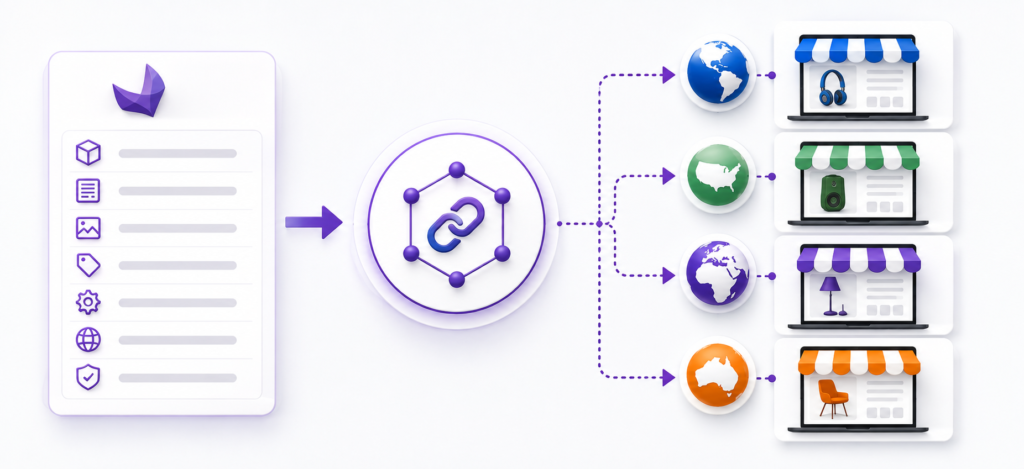
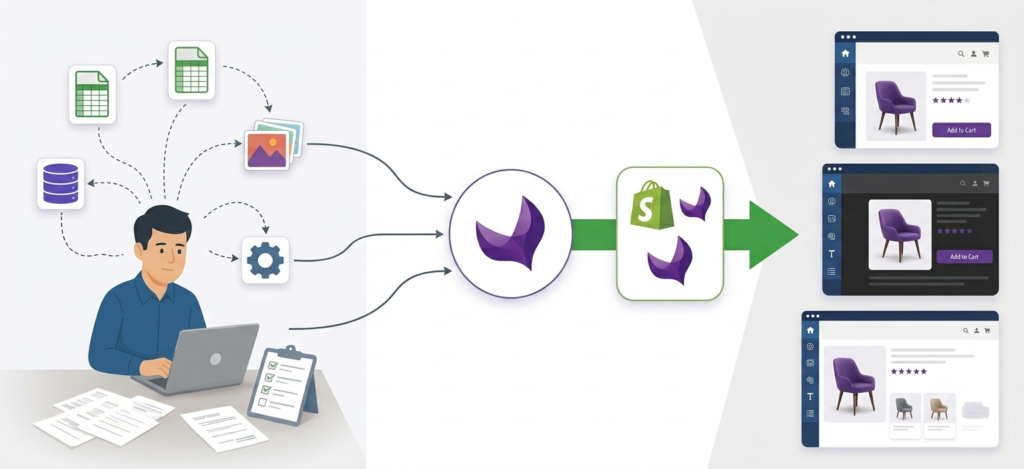
Rather than relying on repetitive imports and exports, synchronization establishes a repeatable publishing process that keeps approved product information aligned with the ecommerce storefront.
What Changes Should Be Synchronized?
Product synchronization is an ongoing operational process rather than a one-time activity. Every meaningful change made to approved product information should be reflected in BigCommerce so customers always see accurate and up-to-date content.
Typical synchronization activities include:
- Publishing newly approved products
- Updating product descriptions and specifications
- Refreshing product images and digital assets
- Publishing category and merchandising changes
- Updating SEO metadata
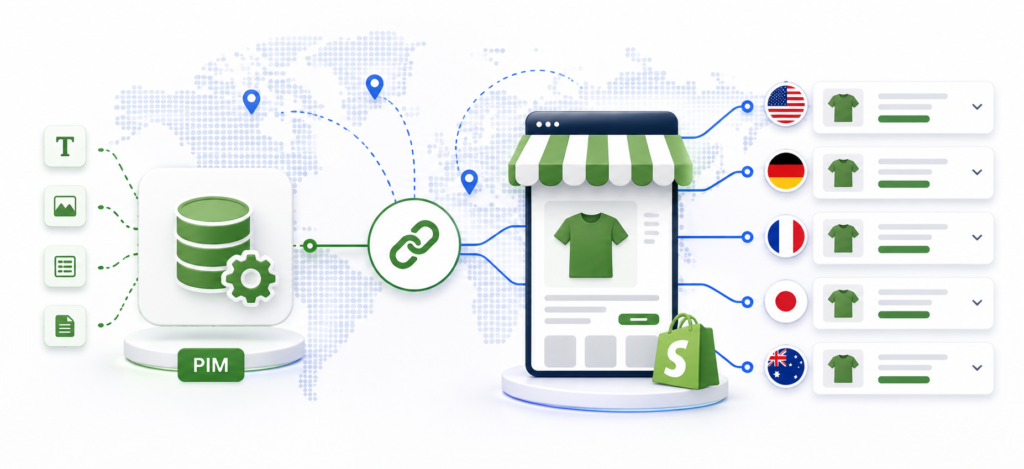
- Synchronizing localized product content
- Publishing product relationship updates
- Republishing products after quality or compliance reviews
Rather than thinking of synchronization as moving product records between systems, it’s more useful to think of it as continuously publishing approved business changes. This approach helps maintain catalog accuracy while reducing manual effort and ensuring the storefront reflects the latest approved product information.
How Product Synchronization Works
Although every implementation is different, the synchronization process generally follows the same pattern:
- Product information is created or updated in Akeneo.
- Product data is enriched, validated, and reviewed.
- Products complete the organization’s approval process.
- Approved product information is published to BigCommerce.
- Updated content becomes available on the storefront.
This workflow allows merchandising and ecommerce teams to continue improving product information while maintaining a consistent and controlled publishing process.
Choosing the Right Synchronization Strategy
Not every business needs the same synchronization approach. The right strategy depends on catalog size, product update frequency, and business operations.
Scheduled publishing is ideal for organizations that release regular product updates throughout the day. Running synchronization jobs at planned intervals keeps product information current while minimizing manual effort.
On-demand publishing is useful when changes need to reach the storefront immediately. Product launches, supplier corrections, promotional campaigns, or urgent content updates often require immediate publication rather than waiting for the next scheduled synchronization.
Organizations with large catalogs should also consider whether to perform full catalog publishing or incremental publishing. A full publication updates every product, while incremental publishing processes only products that have changed. For growing catalogs, incremental publishing typically improves processing efficiency and reduces unnecessary API activity.
Choosing the right synchronization strategy helps balance catalog freshness, operational efficiency, and system performance.
When Should Product Information Be Published?
Not every product update requires immediate publication. The appropriate publishing frequency depends on business operations, catalog size, and customer expectations.
Businesses with frequent merchandising updates may publish changes several times throughout the day, while others may choose scheduled overnight publishing to minimize operational impact. Time-sensitive updates, such as new product launches, supplier corrections, pricing changes, or promotional campaigns, often benefit from immediate publication.
Establishing a publishing schedule that balances catalog freshness with operational efficiency helps maintain accurate product information without creating unnecessary processing overhead.
Common Synchronization Challenges
As catalogs become larger and more complex, synchronization requires careful planning.
Common challenges include:
- Large catalog updates
- Variant publishing
- Category mapping
- Attribute mapping
- Image synchronization
- Product relationships
- Multi-language content
- API limitations
These challenges are rarely caused by the ecommerce platform itself. More often, they stem from inconsistent product models, incomplete product information, or poorly defined publishing rules.
For example, bulk catalog updates can increase processing times, inconsistent attribute mapping may prevent products from publishing correctly, and complex variant structures require additional validation to preserve parent-child relationships. Organizations managing digital assets in external DAM platforms should also ensure media files are available before publication begins.
Identifying these challenges early helps establish a more reliable synchronization process as product catalogs continue to grow.
Best Practices for Reliable Synchronization
Successful synchronization depends on both technology and operational discipline.
Validate product information before publishing
Ensure mandatory attributes are completed and products meet quality standards before they are published.
Automate publishing wherever possible
Automation reduces repetitive manual work while helping maintain consistent product information across the storefront.
Monitor synchronization performance
Review synchronization logs, failed updates, API responses, and processing times regularly to identify issues before they affect customers.
Schedule large catalog updates strategically
When publishing thousands of products, schedule updates outside peak shopping hours whenever possible. This minimizes API contention and provides time to review results before customers encounter the updated catalog.
Review synchronization exceptions
Even well-designed integrations occasionally encounter failures due to missing attributes, invalid values, or temporary API issues. Resolving exceptions proactively helps maintain catalog quality and reduces troubleshooting effort.
Define ownership
Clearly establish who is responsible for monitoring synchronization performance, resolving issues, and approving product changes. Defined ownership becomes increasingly important as catalogs and teams grow.
How StrikeTru Helps
StrikeTru helps manufacturers, distributors, and retailers establish reliable product synchronization between Akeneo PIM and BigCommerce through proven implementation practices and purpose-built integration solutions.
By helping organizations automate publishing, monitor synchronization performance, and reduce manual intervention, StrikeTru enables businesses to maintain accurate product information as catalogs continue to grow.
Final Thoughts
Successful product synchronization is not simply about transferring information between systems. It is about ensuring every approved product change reaches customers accurately, consistently, and at the right time.
As catalogs become larger and product updates become more frequent, organizations need synchronization processes that are reliable, scalable, and easy to maintain. By combining structured publishing workflows with proactive monitoring and well-defined operational practices, businesses can improve product quality, reduce manual effort, and create a more consistent ecommerce experience that supports long-term growth.