Not every integration should become a software development project.
Integrating Akeneo PIM with BigCommerce is an important step in building a scalable product information management strategy. While the objective is straightforward—connecting your PIM with your ecommerce platform—the approach you choose can significantly influence implementation effort, long-term maintenance, and the overall success of the project.
When organizations evaluate integration options, the conversation often starts with a technical question:
“How should we integrate Akeneo PIM with BigCommerce?”
A better question is:
“Which integration approach best aligns with our business goals, technical capabilities, and long-term operating model?”
The right answer isn’t always the most sophisticated solution. It’s the one that delivers the functionality your business needs while remaining practical to implement, support, and scale.
Most organizations choose one of three approaches:
- Custom integration
- Middleware
- Purpose-built connector
Each approach offers distinct advantages, trade-offs, and ideal use cases.
Option 1: Build a Custom Integration
A custom integration connects Akeneo and BigCommerce using their APIs. Every synchronization rule, data mapping, workflow, monitoring capability, and business process is developed specifically for your organization.
Advantages
- Complete control over integration behavior
- Supports highly specialized business processes
- Flexible enough to accommodate unique workflows
- Can be extended to integrate additional business systems
Challenges
Building a custom integration is a software development project that requires more than writing API calls. Organizations should plan for:
- Solution architecture
- API development
- Error handling
- Security
- Logging and monitoring
- Testing
- Documentation
- Ongoing maintenance
Every platform upgrade, API change, or business process enhancement may require additional development and testing, making long-term ownership an important consideration.
Best suited for
- Large enterprises with dedicated development teams
- Organizations with highly customized business processes
- Businesses whose requirements cannot be met by commercial integration solutions
Option 2: Use Middleware
Middleware platforms provide a centralized integration layer between enterprise applications.
Instead of building every integration component from scratch, organizations configure workflows that connect Akeneo, BigCommerce, ERP systems, DAM platforms, CRM applications, and other business systems.
This approach is particularly valuable when product information management is only one part of a broader enterprise integration strategy.
Advantages
- Connects multiple enterprise applications
- Centralized integration management
- Reusable workflows
- Standardized monitoring across systems
Challenges
Although middleware reduces development effort, it still requires implementation expertise.
Organizations must configure mappings, manage workflows, monitor exceptions, and maintain the middleware platform over time. It also introduces another application that must be licensed, administered, and supported.
Best suited for
- Organizations already invested in middleware platforms
- Businesses integrating multiple enterprise applications
- Companies requiring complex orchestration across numerous systems
Option 3: Use a Purpose-Built Connector
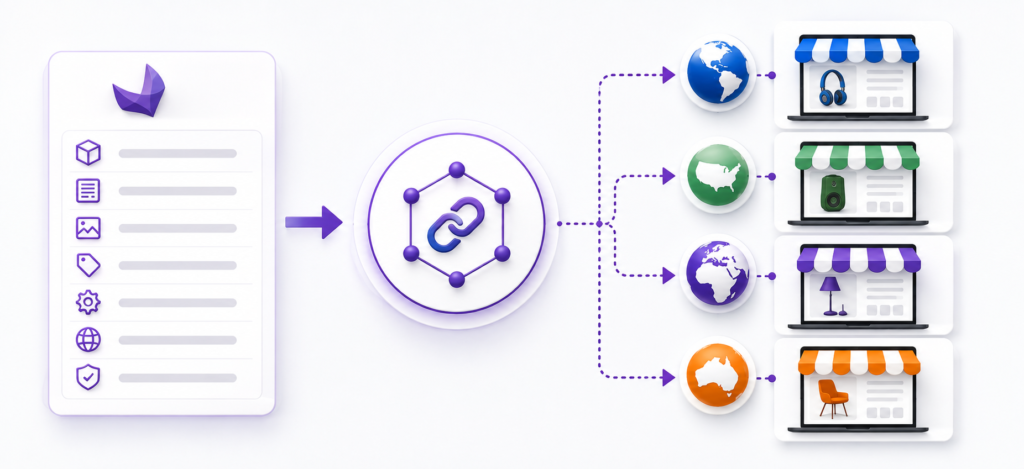
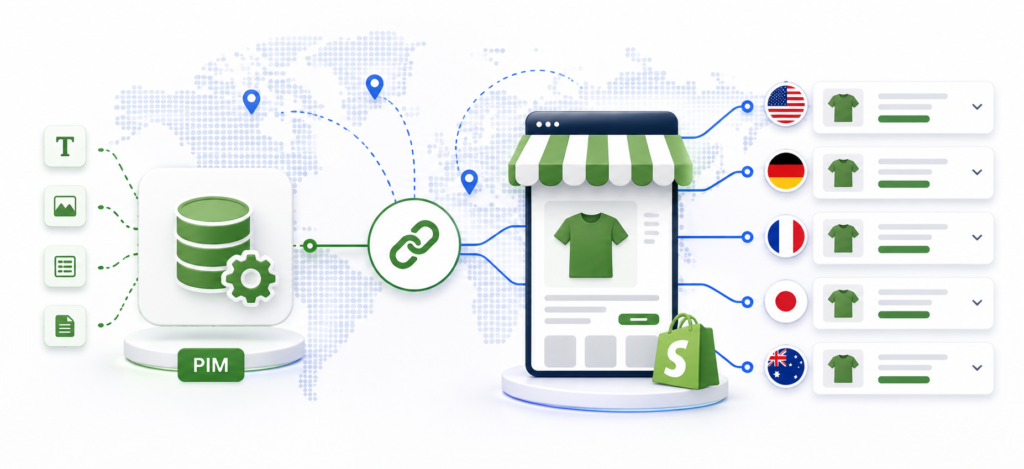
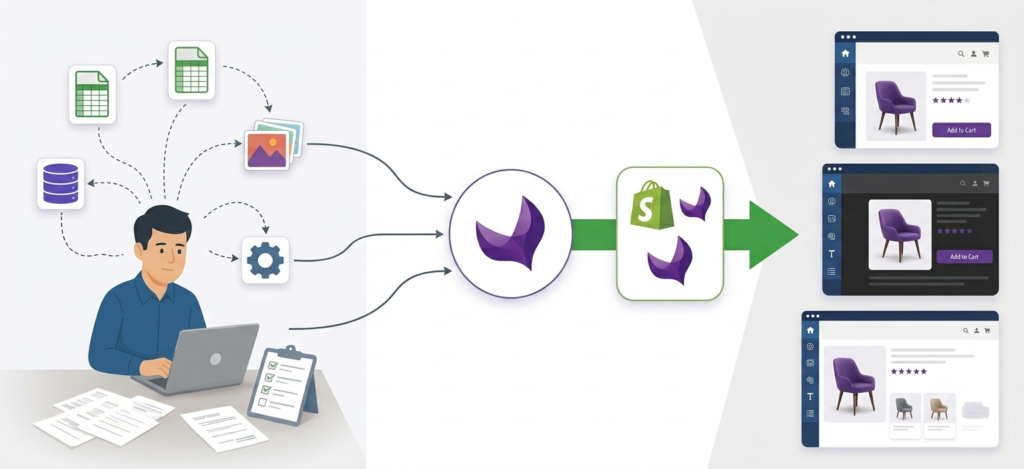
Purpose-built connectors are designed specifically to integrate Akeneo PIM with BigCommerce.
Rather than developing an integration from the ground up, organizations implement a solution that already supports the most common business scenarios. This enables implementation teams to focus on product data preparation, testing, and launch activities instead of building integration infrastructure.
Advantages
- Faster implementation
- Lower upfront investment
- Reduced maintenance
- Faster time-to-value
- Lower operational complexity
Considerations
Purpose-built connectors are designed around proven integration patterns. If your organization requires highly customized workflows involving multiple enterprise applications, a custom integration or middleware platform may provide greater flexibility.
For businesses primarily looking for a reliable and maintainable Akeneo–BigCommerce integration, however, a purpose-built connector often provides the quickest path to value.
Comparing the Three Approaches
The comparison below summarizes the typical characteristics of each approach. Actual implementation effort will vary depending on business requirements and the complexity of your technology landscape.
| Criteria | Custom Integration | Middleware | Purpose-Built Connector |
|---|---|---|---|
| Initial implementation | Slow | Medium | Fast |
| Development effort | High | Medium | Low |
| Maintenance | High | Medium | Low |
| Upfront investment | High | Medium | Low |
| Flexibility | Excellent | High | High for supported scenarios |
| Time-to-value | Slow | Medium | Fast |
| Operational complexity | High | Medium | Low |
| Best suited for | Unique enterprise requirements | Multi-system orchestration | Akeneo–BigCommerce integration |
Which Approach Is Right for You?
There isn’t a single solution that’s right for every business.
A custom integration is appropriate when your organization has unique business requirements and the internal expertise to build and maintain the solution over time.
Middleware is often the right choice when you’re standardizing integrations across multiple enterprise systems and product information management is only one part of a broader integration landscape.
A purpose-built connector is typically the best fit when your objective is to establish a reliable connection between Akeneo and BigCommerce without the time, cost, and ongoing maintenance associated with custom development.
The decision should be based not only on today’s requirements but also on how easily the integration can adapt as your catalog, sales channels, and business processes evolve.
Look Beyond Implementation Costs
Implementation cost is only one part of the overall investment.
Organizations should also evaluate the long-term effort required to maintain and support the integration. Consider factors such as platform upgrades, ongoing monitoring, documentation, internal support, and the availability of technical resources.
A solution with a lower upfront cost but significant maintenance requirements may ultimately cost more than one designed to minimize operational overhead.
Evaluating the total cost of ownership—not just the initial implementation budget—helps organizations select an integration approach that continues to deliver value as the business grows.
Questions to Ask Before Choosing an Integration
Before making a decision, consider the following questions:
- How many business systems need to be integrated?
- Do we have internal API or integration expertise?
- How quickly do we need to launch?
- Who will maintain the integration after go-live?
- What level of customization do we genuinely require?
- How frequently do our business processes change?
- What is the expected total cost of ownership over the next three to five years?
Answering these questions helps organizations evaluate integration options based on long-term business needs rather than short-term technical preferences.
Final Thoughts
Choosing an integration approach is a long-term business decision rather than simply a technical one.
Custom integrations, middleware platforms, and purpose-built connectors each solve different business challenges. The right choice depends on your technology landscape, implementation timeline, available resources, and long-term maintenance strategy.
Rather than selecting the most complex solution, focus on the approach that delivers the capabilities your business needs while remaining practical to support as your organization grows. Taking the time to evaluate your options upfront can reduce implementation risk, simplify ongoing operations, and create a stronger foundation for future ecommerce initiatives.