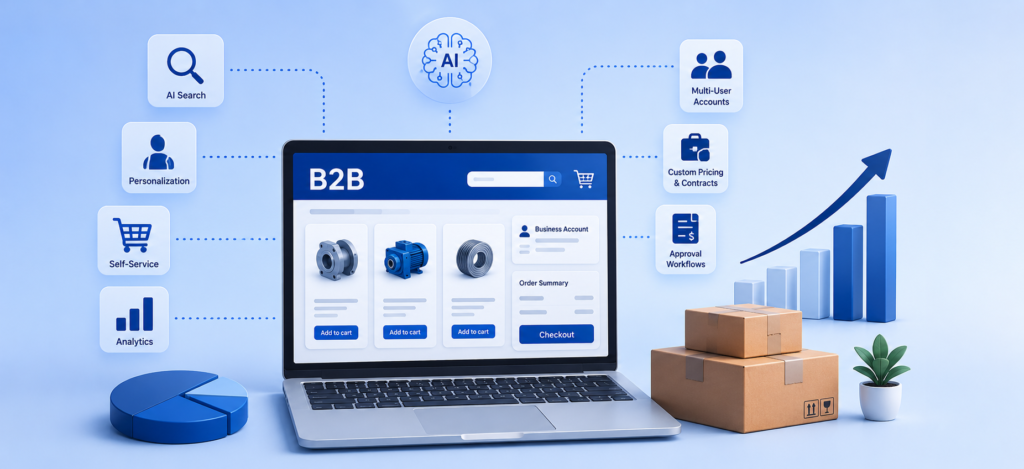
B2B Commerce Isn't Just B2C with Different Pricing
For years, many businesses treated B2B eCommerce as an extension of their consumer storefront. Add customer-specific pricing, hide a few pages behind a login, and call it a B2B portal.
Today’s buyers expect much more.
Procurement teams want to place repeat orders in minutes. Purchasing managers need approval workflows. Finance teams require invoices and payment terms. Sales representatives expect quotes to move seamlessly into orders. Meanwhile, IT teams need the platform to integrate with ERP, PIM, CRM, inventory, and fulfillment systems.
Leading B2B commerce platforms like BigCommerce B2B Edition, Shopware, OroCommerce, Adobe Commerce, and SAP Commerce Cloud are designed to support these operational realities, not just online transactions.
If you’re evaluating a B2B commerce platform, these are ten capabilities that should be on your checklist.
1. Company Accounts with Roles and Permissions
B2B customers aren’t individual shoppers. They’re organizations.
A single customer account may include procurement managers, purchasing assistants, finance teams, warehouse personnel, and business owners, each requiring different levels of access.
A modern B2B platform should support:
- Company hierarchies
- Multiple users per account
- Custom roles and permissions
- Spending limits
- Department-level purchasing controls
Without these capabilities, businesses often resort to shared logins, manual approvals, or offline purchasing processes.
Platforms such as BigCommerce B2B Edition, OroCommerce, and Shopware include robust company account management because they understand that businesses buy differently than consumers.
2. Customer-Specific Pricing and Contract-Based Catalogs
Negotiated pricing is fundamental to B2B commerce.
Different customers often receive different pricing based on contracts, purchasing volume, geography, distribution agreements, or strategic partnerships.
Rather than maintaining multiple catalogs or manually adjusting prices, modern commerce platforms should support:
- Customer-specific price lists
- Contract pricing
- Tiered and volume discounts
- Customer-specific catalogs
- Promotional pricing
The goal isn’t simply flexibility. It’s ensuring pricing remains accurate while minimizing operational overhead.
3. Buyer Portals That Support Self-Service
Modern buyers don’t want to email sales representatives to reorder products they’ve purchased for years.
A dedicated buyer portal should enable customers to:
- View company orders
- Manage users
- Track shipments
- Download invoices
- View order history
- Save shopping lists
- Request quotes
- Reorder previous purchases
The best buyer portals reduce administrative work while giving customers more control over their purchasing experience.
4. Built-In Quote Management and Approval Workflows
Unlike B2C transactions, many B2B purchases require internal approvals before an order can be placed.
A junior buyer may build a cart, while a purchasing manager reviews pricing before submitting a purchase order.
Leading B2B platforms support workflows such as:
- Quote requests
- Internal approvals
- Purchase order generation
- Budget controls
- Multi-stage purchasing processes
These workflows allow organizations to digitize existing procurement processes instead of forcing teams to work outside the platform.
5. Fast Ordering for Repeat Purchases
Many B2B customers know exactly what they need before visiting your website.
Instead of browsing categories, they’re searching for SKUs, manufacturer part numbers, or products they’ve ordered dozens of times before.
Modern platforms should provide:
- Quick Order by SKU
- CSV or spreadsheet uploads
- Bulk ordering
- Saved carts
- Shared shopping lists
- One-click reordering
These capabilities significantly reduce friction for procurement teams placing large or recurring orders.
6. Rich Product Data Powered by PIM
Product content is often the deciding factor in complex B2B purchases.
Buyers need far more than product names and images.
They expect:
- Technical specifications
- Compatibility information
- Installation guides
- Safety documentation
- CAD drawings
- Product videos
- Certifications
- FAQs
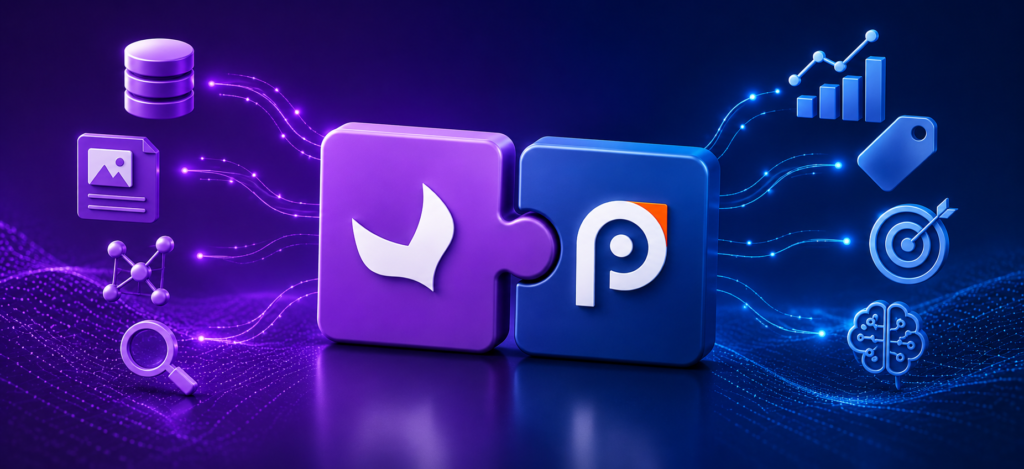
This is why many manufacturers and distributors combine their commerce platform with a Product Information Management (PIM) solution such as Akeneo or Pimcore to ensure product information remains accurate, complete, and consistent across every sales channel.
Strong product data doesn’t just improve customer experience. It also powers search, merchandising, AI recommendations, and product discovery.
7. Seamless Integration with ERP and Business Systems
Commerce shouldn’t become another isolated application.
A modern B2B platform must integrate seamlessly with systems that already run the business, including:
- ERP
- CRM
- PIM
- DAM
- Inventory Management
- Shipping Platforms
- Tax Engines
- Customer Support Systems
API-first platforms make it easier to synchronize customers, products, pricing, inventory, and orders without duplicating business logic across multiple systems.
The result is fewer manual processes, improved accuracy, and greater operational efficiency.
8. Support for Large and Complex Product Catalogs
Many B2B organizations manage tens of thousands, or even millions, of SKUs.
Industrial manufacturers, automotive suppliers, electrical distributors, and healthcare organizations often require sophisticated product relationships that go far beyond simple variants.
Look for platforms that support:
- Flexible product modeling
- Complex variants
- Product relationships
- Bundles and kits
- Configurable products
- Large-scale catalog performance
As product complexity grows, your commerce platform should make catalog management easier, not harder.
9. AI-Ready Commerce Starts with Structured Data
AI is rapidly changing how buyers discover and evaluate products.
Whether through conversational search, intelligent recommendations, AI-powered merchandising, or emerging commerce agents, success depends on one thing: structured product data.
Organizations investing in AI should prioritize:
- Complete product attributes
- Consistent taxonomy
- Rich metadata
- High-quality specifications
- Well-governed product content
AI cannot compensate for incomplete or inconsistent product information. Clean product data remains the foundation of every intelligent commerce experience.
10. Multi-Storefront and Global Commerce
Many B2B organizations serve multiple brands, countries, distributors, or customer segments.
Managing separate commerce instances for each market quickly becomes difficult to maintain.
Leading platforms provide capabilities such as:
- Multiple storefronts
- Regional catalogs
- Market-specific pricing
- Localized content
- Multi-currency support
- Centralized administration
This enables organizations to deliver localized buying experiences while maintaining operational consistency across the business.
Choosing the Right B2B Commerce Platform
Every leading B2B commerce platform, including BigCommerce, Shopware, OroCommerce, Adobe Commerce, and Salesforce Commerce Cloud, offers a different mix of capabilities. The right choice depends on your buying workflows, catalog complexity, integration requirements, and long-term growth strategy, not just a feature checklist.
Selecting the right platform is only the first step. A successful implementation requires the right architecture, product data strategy, system integrations, and buyer experience to ensure your commerce solution can scale with your business.
At StrikeTru, we help manufacturers, distributors, wholesalers, and retailers evaluate, implement, and optimize B2B commerce solutions across leading platforms. Whether you’re selecting a new platform or modernizing an existing one, our team helps you build a solution that aligns with your business goals and supports future growth.