Every Shopify Editions release introduces new features, but Spring ’26 signals something much bigger than platform enhancements.
Across more than 150 announcements, Shopify has outlined its vision for the future of commerce—one where AI becomes an active participant in product discovery, buying decisions, and customer interactions.
For merchants, the real value isn’t in understanding every feature. It’s in recognizing the opportunities these capabilities create and preparing for the changes they will bring.
Here are the five biggest opportunities we see from Shopify’s latest release.
Opportunity #1: Reach Customers Through AI-Powered Product Discovery
For years, merchants focused on making products discoverable through search engines, marketplaces, and paid advertising.
Shopify’s introduction of AI Product Discoverability marks the beginning of another discovery channel—AI assistants.
Instead of typing keywords into a search engine, customers are increasingly asking conversational questions such as:
“What’s the best office chair for someone who works eight hours a day?”
AI assistants evaluate available products, compare attributes, and recommend the best options.
For merchants, this creates a new opportunity to reach customers before they ever visit a website.
However, AI can only recommend products it understands. Rich attributes, accurate specifications, and structured product information become increasingly important because they provide the context AI needs to make confident recommendations.
What merchants should do:
Evaluate whether your product catalog contains the structured information AI needs—not just marketing copy, but detailed attributes, technical specifications, and product relationships.
Opportunity #2: Prepare for AI to Become a Buyer
One of Shopify’s most significant announcements is Agentic Commerce, supported by technologies like the Universal Commerce Protocol (UCP) and Commerce MCPs.
Together, these initiatives allow AI agents to securely browse catalogs, compare products, build shopping carts, and complete purchases on behalf of customers.
This changes a long-standing assumption about ecommerce.
Until now, merchants designed product pages primarily for people.
Increasingly, they’ll also need to serve AI systems that evaluate products based on facts rather than promotional messaging.
An AI agent doesn’t care about banners or creative copy. It looks for structured information such as compatibility, dimensions, availability, pricing, and other product details that help determine whether a product matches a customer’s request.
What merchants should do:
Start thinking about your catalog as something AI needs to interpret—not just customers. The easier it is for AI to understand your products, the better positioned they’ll be for agent-driven commerce.
Opportunity #3: Turn Your Product Catalog into a Competitive Advantage
One of the most important launches in Spring ’26 is the Shopify Catalog.
While it may sound like another catalog management feature, it represents something much larger.
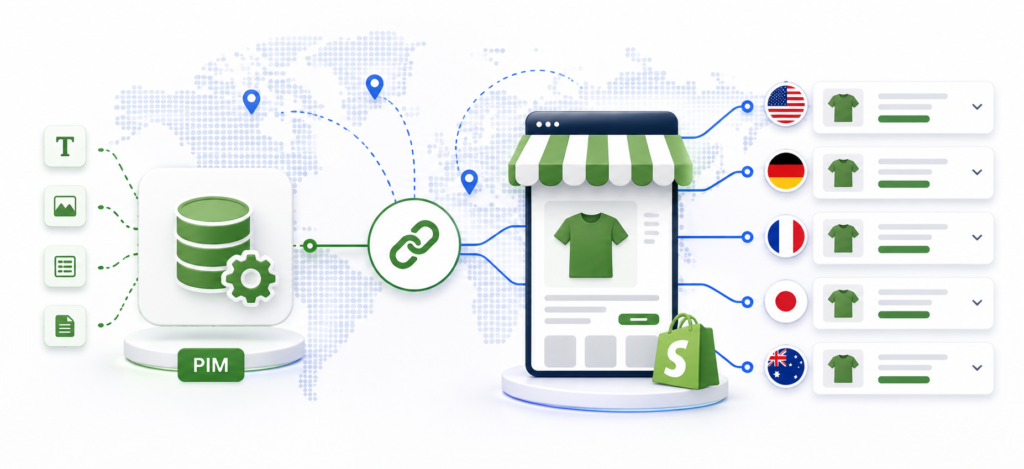
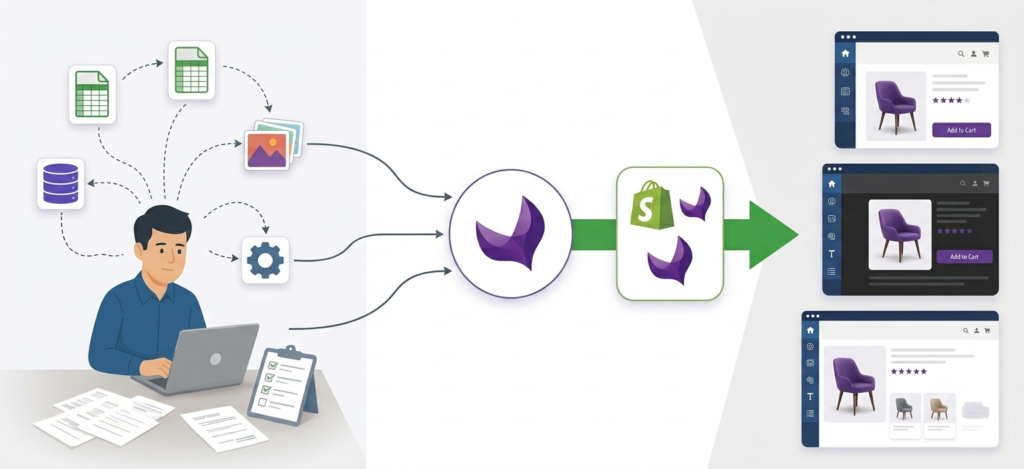
The Shopify Catalog provides a centralized, standardized way for product information to support AI-powered commerce experiences.
This reflects a broader shift happening across the industry.
Product catalogs are evolving from static collections of product listings into structured data assets that power discovery, recommendations, personalization, and AI interactions.
Merchants that invest in improving the quality, consistency, and governance of their product information will be better positioned to take advantage of these capabilities as they continue to evolve.
What merchants should do:
Look beyond simply adding products to your catalog. Focus on improving product data quality, standardizing attributes, and maintaining consistent information across every sales channel.
Opportunity #4: Give AI the Context Customers Expect
Customers don’t just ask about products.
They ask about shipping, warranties, returns, installation, maintenance, and countless other topics before making a purchase.
Shopify’s new Knowledge Base allows merchants to provide this information in a structured way so AI assistants can deliver accurate, brand-specific answers.
This creates an opportunity to improve customer experiences without requiring shoppers to search through multiple pages or contact support.
It also highlights an important shift.
Product information alone is no longer enough. Business knowledge is becoming part of the digital shopping experience.
What merchants should do:
Review the information customers frequently request outside of product pages. Organizing this knowledge now will help support AI-driven customer interactions as they become more common.
Opportunity #5: Start Measuring AI as a Commerce Channel
As AI becomes another way customers discover products, merchants need visibility into how these interactions contribute to business performance.
With AI Shopping Analytics and AI Product Improvement Recommendations, Shopify is giving merchants new ways to understand how products perform in AI-powered experiences and where product information can be improved.
This shifts AI from being an emerging technology to becoming a measurable acquisition and optimization channel.
Just as merchants monitor SEO, email campaigns, and paid advertising today, AI performance will increasingly become another metric worth tracking.
What merchants should do:
Don’t wait until AI traffic becomes significant. Begin monitoring how your product information performs, identify gaps in product data, and establish a process for continuous catalog improvement.
The Bigger Opportunity
Successful PIM implementations are built through continuous validation rather than waiting until the end of the project.
Throughout implementation, organizations review prototypes, conduct workshops, test integrations, validate workflows, and perform user acceptance testing before production deployment.
This iterative approach allows teams to identify issues early, refine business processes, and ensure the solution aligns with business requirements before launch.
StrikeTru's Perspective
One thing stood out as we looked across Shopify’s Spring ’26 announcements: nearly every major innovation relies on the same foundation—trusted product information.
Whether it’s AI-powered discovery, agentic commerce, or intelligent product recommendations, these capabilities depend on data that is accurate, standardized, and well-governed.
That’s why we believe the conversation shouldn’t start with “How do we adopt AI?” It should start with “Is our product data ready for AI?”
As AI continues to reshape commerce, product data will no longer be a back-office asset. It will become one of the primary drivers of product discoverability, customer experience, and business growth.
We’ve highlighted the announcements we believe will have the biggest strategic impact on merchants, but Shopify’s Spring ’26 Editions includes many more updates across commerce, retail, marketing, operations, and developer tooling. If you’d like to explore the complete release, you can browse the official Shopify Spring ’26 Editions here: