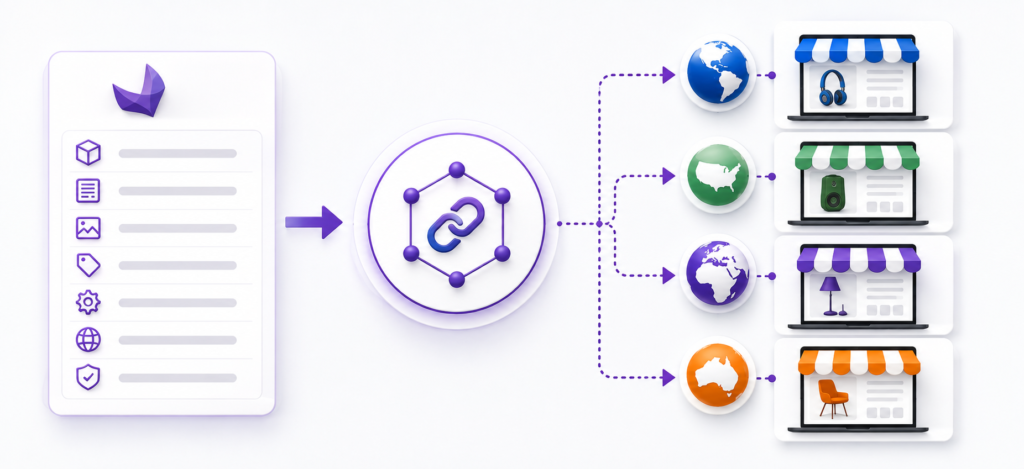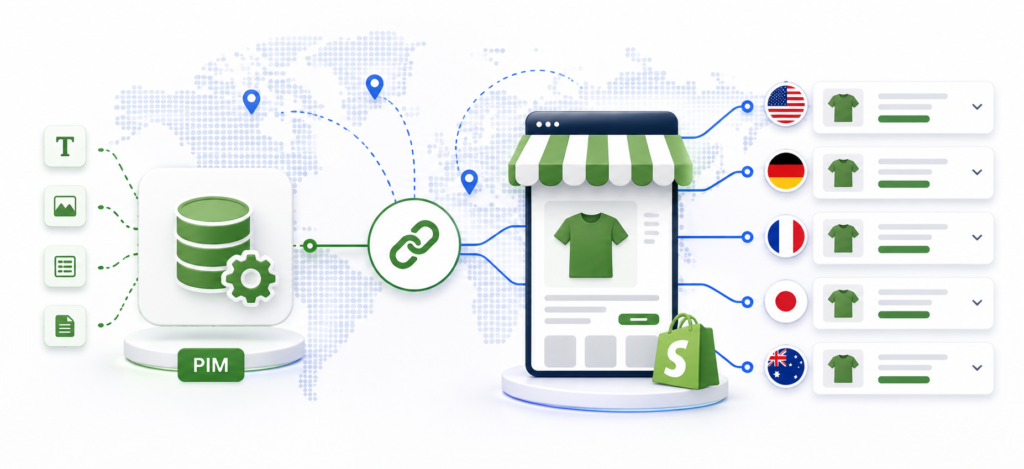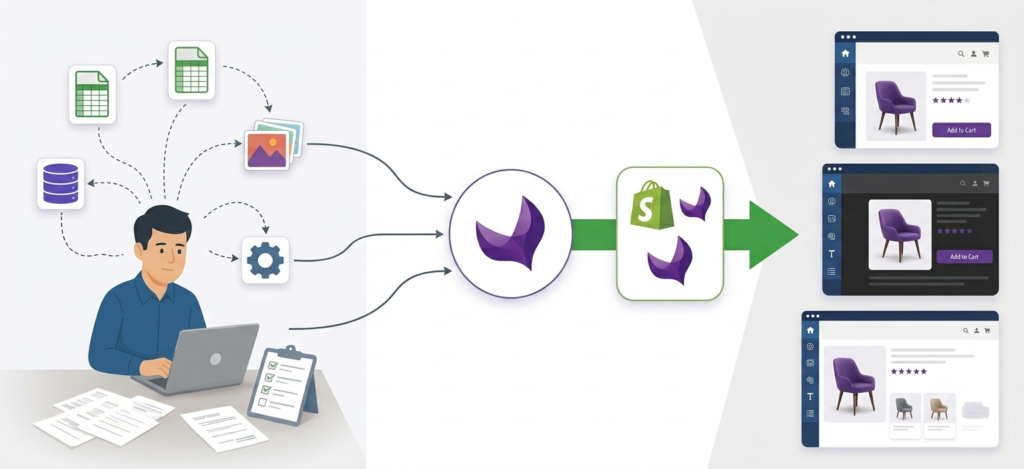
Choosing the right B2B ecommerce platform goes beyond storefront design — it impacts scalability, operations, buyer experience, and long-term growth.
BigCommerce is built for complex B2B commerce with native features like company accounts, approval workflows, quotes, invoices, multi-storefront support, and advanced catalog management. Shopify focuses on simplicity, speed, and app-driven flexibility, making it ideal for brands with lighter B2B requirements and faster launch goals.
This comparison breaks down the key differences between BigCommerce and Shopify across B2B functionality, catalog complexity, integrations, automation, customization, and scalability — helping businesses choose the platform that fits their operational needs best.
High-level feature comparision - BigCommerce vs Shopify
| Flow / Capability | BigCommerce | Shopify | Notes |
|---|---|---|---|
| Company Accounts (Core B2B Model) | Company accounts, account hierarchies, standard & user-defined roles & permissions | Company accounts with limited standard roles (location admin, ordering only) & permissions. An app is needed to add custom roles & permissions | BigCommerce has advanced B2B capabilities OOB |
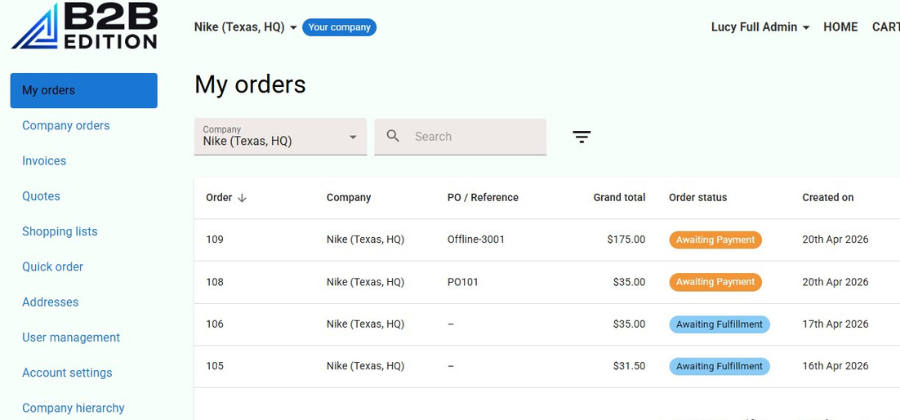
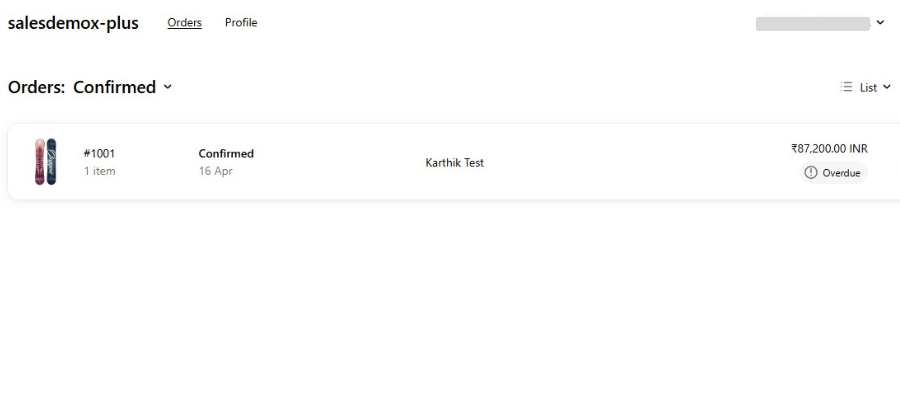
| Buyer Portal / Self-Service Dashboard | Dedicated Buyer Portal with multiple features - Company Orders, My Orders, Quick Order, Quotes, Invoices, Shopping Lists, User Management, Account Settings | Limited features - Orders, Company Profile, User Management | Shopify is missing multiple features that are native in BigCommerce - Quotes, Invoices, Quick Order, Company Orders, Shared Shopping Lists |
| Quote Management | Robust quote management features | Requires third party app or a custom build via open source buyer portal | BigCommerce has CPQ capabilities OOB |
| Price Lists / Customer-specific Pricing | Advanced price lists feature, bulk pricing rules | Advanced price lists, bulk pricing rules | Both provide good support to manage B2B pricing |
| Tiered / Volume Pricing | Strong native support | Strong native support | Tie, both platforms support it |
| Custom Catalogs per Customer | Yes (via price lists + category inclusions) | Yes (via catalogs) | Shopify makes it easier to create custom catalogs. Provides more granular control on what products to include in a catalog |
| Payment Terms (Net terms) | Net 5–60 | Net 7 to 90 + “no payment terms” options | Shopify offers a few extra options for Payment Terms |
| Purchase Orders (PO Number) | Native for B2B customers. Configurable per customer | Not available out of the box. Offered as a global payment method, not B2B customer specific | BigCommerce allows more configurability |
| Order Approval Workflows | Built-in approval flows based on buyer roles & permissions | Limited support. Requires customization | Sample BigC Flow: Jr Buyer creates shopping list, Sr Buyer approves & converts to quote, Admin converts quote to an order |
| Reorder | Native reorder flows | Requires apps/custom build | BigCommerce has reorder capabilities OOB |
| Quick Order by SKU (via UI & File Upload) | Native feature | Requires apps/custom build | BigC has an AI app to upload CSV/XLSX to create orders. PDF upload coming soon |
| Multi-storefront (B2B + B2C) | Strong native multi-storefront | Requires multiple stores or workarounds | BigCommerce is more efficient in this area |
| Headless Commerce (B2B) | Strong APIs, B2B supported | Strong APIs, but B2B gaps | BigCommerce has more complete B2B features and API coverage for those |
| Checkout Customization | For all plans. Flexible (Stencil + APIs) | For Plus plan only. Flexible | Both are flexible |
| Order Search & Management | Limited search filters but functional. Cannot search custom order fields out of the box | Provides more search filters (including search by CC, tags, etc). Configurable Order ID | Shopify has stronger order search and usability features |
| Custom Fields (Orders) | Can create metafields via API, limited UI visibility | Can create metafields via UI. They’re visible and easier to manage | Shopify is more advanced and user friendly |
| ERP / PIM Integrations | Strong (open APIs). No API access (to WebDAV) for non image file upload | Strong (open APIs). Shopify allows API access to non image files (e.g. .glb, .pdf files) | Shopify is slightly better at file management |
| Catalog Complexity Handling (100k+ SKUs) | Handles large catalogs well. Better modeling features - more flexible variant modeling, product hierarchies, modifier options (non SKU affecting), brands, complex product rules | Simple, not as flexible. Smart Collections is a good feature. Limited to 3 variant options per product. Allows 2048 vs 600 variants | Shopify is awkward for configurable / industrial / B2B catalogs that require sophisticated data modeling |
| Variant Limits | 600 variants per product | Up to 2048 in theory |
Not every Shopify store or setup will handle this cleanly without:
|
| Workflow Automation | Limited native support via UI. Automations must be API-driven | Strong via Shopify Flow (in-app, no-code automation) | Shopify has easier to use no-code automation features |
| App Ecosystem (B2B) | Smaller but focused | Large ecosystem. Heavier reliance on apps, especially for B2B features | |
| Performance (Frontend UX) | Depends on implementation quality | Strong out-of-the-box, but also depends on setup |
Performance is heavily impacted by:
|
| Customization Flexibility | High flexibility, fewer restrictions | Structured extensibility, more guardrails |
BigC provides more control over themes, APIs, URLs, and more for complex builds. Shopify is easier to customize
BigCommerce is more customizable
|
| Security / Access Control (B2B) | Good for true B2B operations (regional catalogs, complex market specific pricing, multi-store architecture) | Good for more centralized operations and simple B2B models | Shopify optimizes for simplicity BigCommerce optimizes for real-world B2B complexity And international B2B is inherently complex |
| International B2B (multi-currency, regions) | Strong support for regional catalogs & pricing | Better for centralized/simple operations | BigCommerce handles international complexity better. |
| Time to Launch (B2B) | Faster for complex B2B (less customizations) | Faster for simple setups | Shopify apps and relatively more implementation effort required to achieve parity with BigC features |
| Buyer Portal Customization | Offer an open-source buyer portal with access to the underlying code | B2B features are enabled by a new customer accounts screen, limited customization ability, cannot be open sourced | BigCommerce offers a structured, extensible Buyer Portal, while Shopify relies on a standardized customer account UI with limited customization |
BigCommerce vs Shopify for B2B: which one should you choose?
BigCommerce
- You need advanced B2B features
- Approvals, quotes, invoices, shared shopping lists, multi-user accounts, account hierarchy
- You have a large or complex catalog
- Industrial, configurable, B2B catalogs, or 100k+ SKUs
- You rely on:
- ERP
- PIM
- Integrations
- You are running:
- Multiple sites (B2B and/or B2C) in one ecosystem
Shopify
- Your B2B is simple or emerging
- Wholesale, light B2B
- You prioritize:
- Quick launch with basic B2B capabilities
- More out of the box capabilities to build front-end experience
- Your team prefers:
- App-based solutions
- Low-code automation (Shopify Flow)
- Your catalog is relatively simple
How B2B actually gets implemented
| Area | BigCommerce | Shopify |
|---|---|---|
| Starting Point | B2B features available out-of-the-box | B2B features partially available, rest built via apps |
| Initial Setup | Configure companies, hierarchies, pricing, workflows | Configure basics + install apps for missing features or build them out |
| Time to MVP | Slightly longer for complex B2B (more configuration upfront) | Faster for Basic B2B (simpler setup, fewer dependencies initially) |
| Handling Core B2B Needs | Highly configurable out of the box | Mix of apps, custom logic, and platform features |
| Custom Requirements | Extend via APIs, theme, open source buyer portal | Add apps or build custom components |
| System Complexity Over Time | Grows gradually | Grows as more apps and logic are added |
| Ongoing Maintenance | Platform-driven with integrations | App updates, compatibility, and custom logic management |
| Debugging Issues | Typically within platform + integrations | Often across apps, custom code, and platform |
| Team Dependency | Lower reliance on third party apps | Higher reliance on apps and partners |
Common B2B challenges and what you actually need
Customer-specific pricing becomes hard to manage
→ You need scalable price lists and centralized pricing control
Approvals slow down purchasing
→ You need role-based workflows built into the buying process
Repeat buyers don’t use the site
→ You need fast ordering (SKU entry, bulk order, reorder flows)
Catalog complexity increases over time
→ You need flexible product modeling, not rigid structures
Sales, pricing, and orders fall out of sync
→ You need connected workflows across pricing, quoting, and ordering
ERP/PIM becomes critical to operations
→ You need clean, API-first integrations with minimal duplication of logic
Scaling across regions creates inconsistency
→ You need market-level control over catalogs, pricing, and customers, with a consolidated view of orders, customers, and scoped content per storefront
Conclusion
Both BigCommerce and Shopify can support B2B.
The decision comes down to where you want the complexity handled:
- If your model includes structured pricing, approvals, complex catalogs, and tight system integrations, you will need a platform that supports these directly.
- If your model is simpler or evolving, you can assemble these capabilities as needed.
The right choice is the platform that aligns with your current operating model and how you expect it to scale.