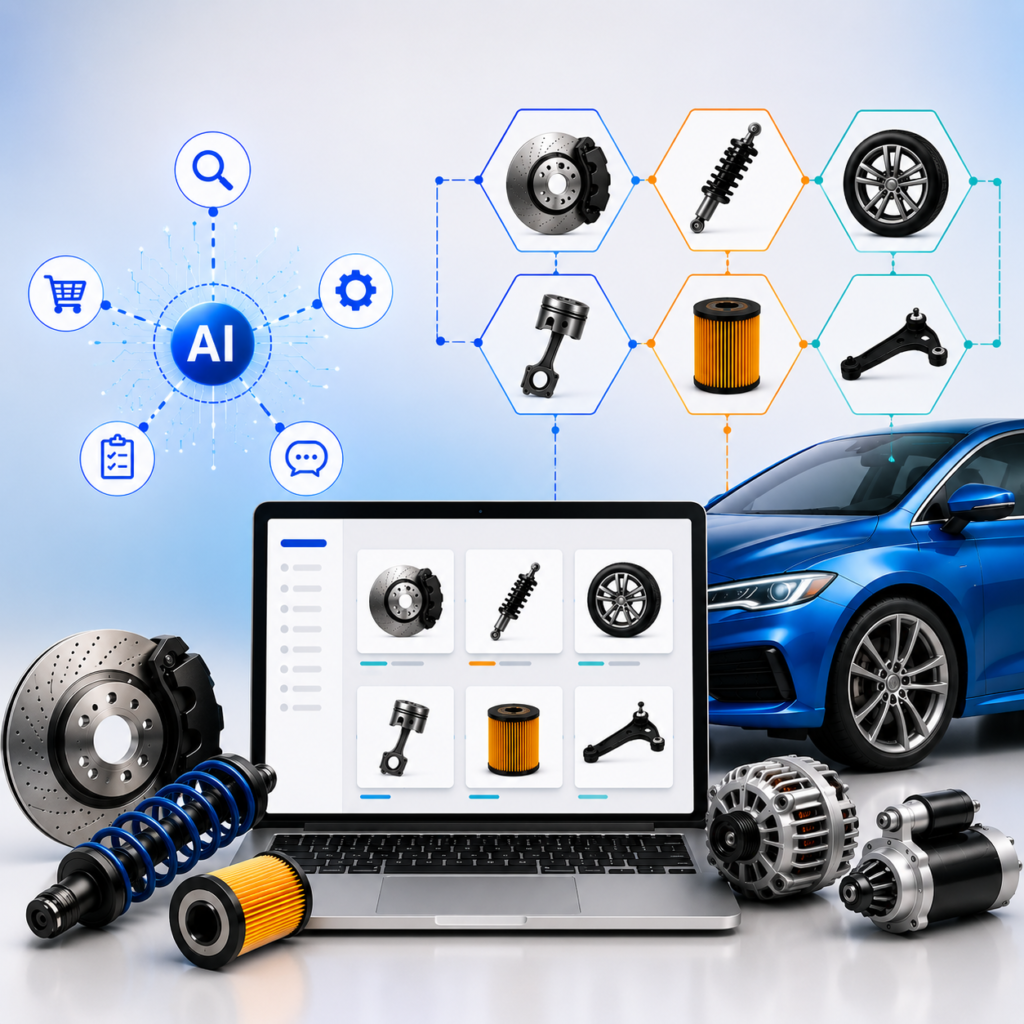
As AI-powered search, shopping assistants, and conversational commerce experiences become more common, many organizations are focused on improving product visibility.
However, visibility is only part of the challenge.
A growing issue for manufacturers, distributors, retailers, and B2B organizations is ensuring that AI systems understand products correctly. Products may appear in AI-generated recommendations, comparisons, and buying guidance, but the information presented is not always accurate.
In some cases, AI may misunderstand product categories, overlook important specifications, confuse product variants, or generate misleading comparisons. As a result, a product can be visible yet still be represented incorrectly.
This emerging challenge can be described as the AI Representation Problem: the gap between how a business defines its products and how AI systems interpret them.
As AI becomes a larger part of product discovery and decision-making, maintaining accurate product representation is becoming an important product data and commerce operations priority.
What Is the AI Representation Problem?
The AI Representation Problem occurs when an AI system generates an incomplete, inaccurate, or misleading understanding of a product.
Unlike traditional ecommerce search engines that primarily retrieve information, AI systems interpret information. They analyze product data, descriptions, specifications, reviews, and content from multiple sources to generate recommendations and answers.
The quality of those outputs depends heavily on the quality, consistency, and completeness of the information available to them.
For example, an AI system may:
- Recommend a product for the wrong use case
- Misclassify a product category
- Omit important technical specifications
- Confuse one product variant with another
- Compare products using incomplete information
- Misinterpret compatibility or fitment requirements
In many situations, the issue is not that the AI system lacks intelligence. Rather, the product information being consumed lacks the context necessary to support accurate interpretation.
Five Ways AI Misrepresents Products
Understanding the most common representation issues can help organizations identify potential risks within their own product data environments.
1. Missing Context
Many product catalogs contain specifications but provide limited context.
For example, a product record may include dimensions, materials, technical features, and performance metrics while offering little information about intended use cases, customer requirements, or product positioning.
Humans can often fill these gaps based on experience. AI systems cannot always do the same.
As a result, products may be recommended in situations where they are technically related but not actually appropriate.
This is particularly common in technical B2B catalogs, industrial products, automotive parts, electronics, and configurable product lines.
2. Category Confusion
Product categorization plays a significant role in how AI systems understand relationships between products.
When category structures are inconsistent, overly broad, or poorly defined, AI may associate products with adjacent categories that share similar characteristics.
For example:
- Accessories may be interpreted as primary products
- Replacement parts may be treated as standalone products
- Professional-grade products may be grouped with consumer products
- Similar product types may be merged into a single category
These issues become more likely when different channels use different taxonomies or naming conventions.
3. Attribute Interpretation Errors
AI systems rely heavily on product attributes to understand capabilities and differentiate products.
Problems occur when attributes are:
- Incomplete
- Inconsistent
- Ambiguous
- Structured differently across products
For example, two products may provide the same functionality but use different terminology to describe it. While humans may recognize the similarity, AI systems may interpret them as different capabilities.
Likewise, missing attributes can cause AI to underestimate a product’s suitability for a particular recommendation.
4. Product Comparison Errors
AI-generated comparisons are becoming increasingly common in product discovery experiences.
Customers can now ask AI systems to compare products, recommend alternatives, or identify the best option for a specific requirement.
The accuracy of these comparisons depends on the underlying product information.
When product attributes are inconsistent or incomplete, AI may:
- Compare unrelated specifications
- Ignore key differentiators
- Overemphasize minor features
- Recommend inappropriate alternatives
The result may be a technically plausible comparison that does not reflect how the business positions its products.
5. Variant and Relationship Confusion
Complex product catalogs often include multiple product variants, bundles, accessories, replacement components, and compatibility relationships.
If these relationships are not clearly structured, AI systems may struggle to distinguish between them.
Common issues include:
- Mixing specifications across variants
- Recommending incompatible products
- Confusing parent and child products
- Misunderstanding product bundles
- Overlooking compatibility requirements
Organizations with large assortments or configurable products often face the greatest risk in this area.
Why Accurate Representation Matters
Some organizations assume that appearing in AI-generated results is enough.
In reality, inaccurate representation can create business challenges even when products remain visible.
Reduced Discoverability
If AI systems misunderstand product capabilities, intended use cases, or category placement, products may be excluded from relevant recommendations.
This limits visibility for the customers most likely to purchase them.
Lower Conversion Rates
Customers increasingly use AI-generated summaries and recommendations to evaluate products.
When those recommendations are incomplete or misleading, buyers may select competing products or abandon the purchasing process altogether.
Increased Returns and Support Costs
Misunderstood products often create expectation gaps.
Customers may purchase products believing they meet specific requirements, only to discover otherwise after delivery.
The result can include:
- Higher return rates
- Increased support inquiries
- Longer sales cycles
- Greater operational costs
Reduced Control Over Product Messaging
Organizations invest significant effort in product positioning, differentiation, and content development.
When AI systems generate their own interpretations, businesses have less direct control over how products are described and compared.
This makes authoritative product information increasingly important.
Maintaining Authoritative Product Information
While organizations cannot control every AI model, they can improve the quality of the information those systems consume.
The most effective strategy is establishing an authoritative source of product information supported by strong governance practices.
This includes:
- Standardized product naming conventions
- Consistent category structures
- Well-defined attribute models
- Complete product specifications
- Accurate product relationships
- Structured compatibility information
- Consistent content across channels
The objective is not to optimize for a specific AI platform. The objective is to provide clear, trustworthy product information that can be interpreted consistently across any platform, channel, or search experience.
For many organizations, this is where Product Information Management (PIM) and Product Experience Management (PXM) processes become increasingly valuable.
By centralizing and governing product information, businesses can reduce inconsistencies that often contribute to representation problems.
An AI Representation Readiness Checklist
Organizations evaluating their preparedness can start by asking a few practical questions:
| Question | Why It Matters |
|---|---|
| Are product attributes complete and standardized? | AI relies heavily on structured product information. |
| Are categories consistently defined across channels? | Inconsistent taxonomy increases interpretation risk. |
| Are product variants clearly modeled? | Prevents confusion between configurations and versions. |
| Are compatibility and relationship data maintained? | Supports accurate recommendations and comparisons. |
| Is there a single authoritative source of product information? | Reduces conflicting product data across systems. |
| Are product descriptions providing context, not just specifications? | Helps AI understand intended use cases and customer needs. |
Organizations that struggle with these fundamentals may also struggle with how their products are represented in AI-powered experiences.
Conclusion
As AI continues to influence product discovery, recommendations, and purchasing decisions, visibility alone is no longer enough.
Products must not only be discoverable but also accurately understood.
The organizations best positioned for AI-driven commerce will be those that focus on the quality, structure, and governance of their product information. Clear taxonomy, consistent attributes, strong product relationships, and authoritative data sources help reduce the risk of misrepresentation while improving overall commerce operations.
The AI Representation Problem is ultimately a product data challenge. Addressing it requires many of the same capabilities that support scalable digital commerce, including data governance, product enrichment, PIM, PXM, and operational discipline.
As businesses continue evaluating AI readiness initiatives, ensuring accurate product representation may become just as important as ensuring product visibility.